Tag Archives: Abroad Blog of the Week

Abroad Blog of the Week: Suitcase on the Sidewalk

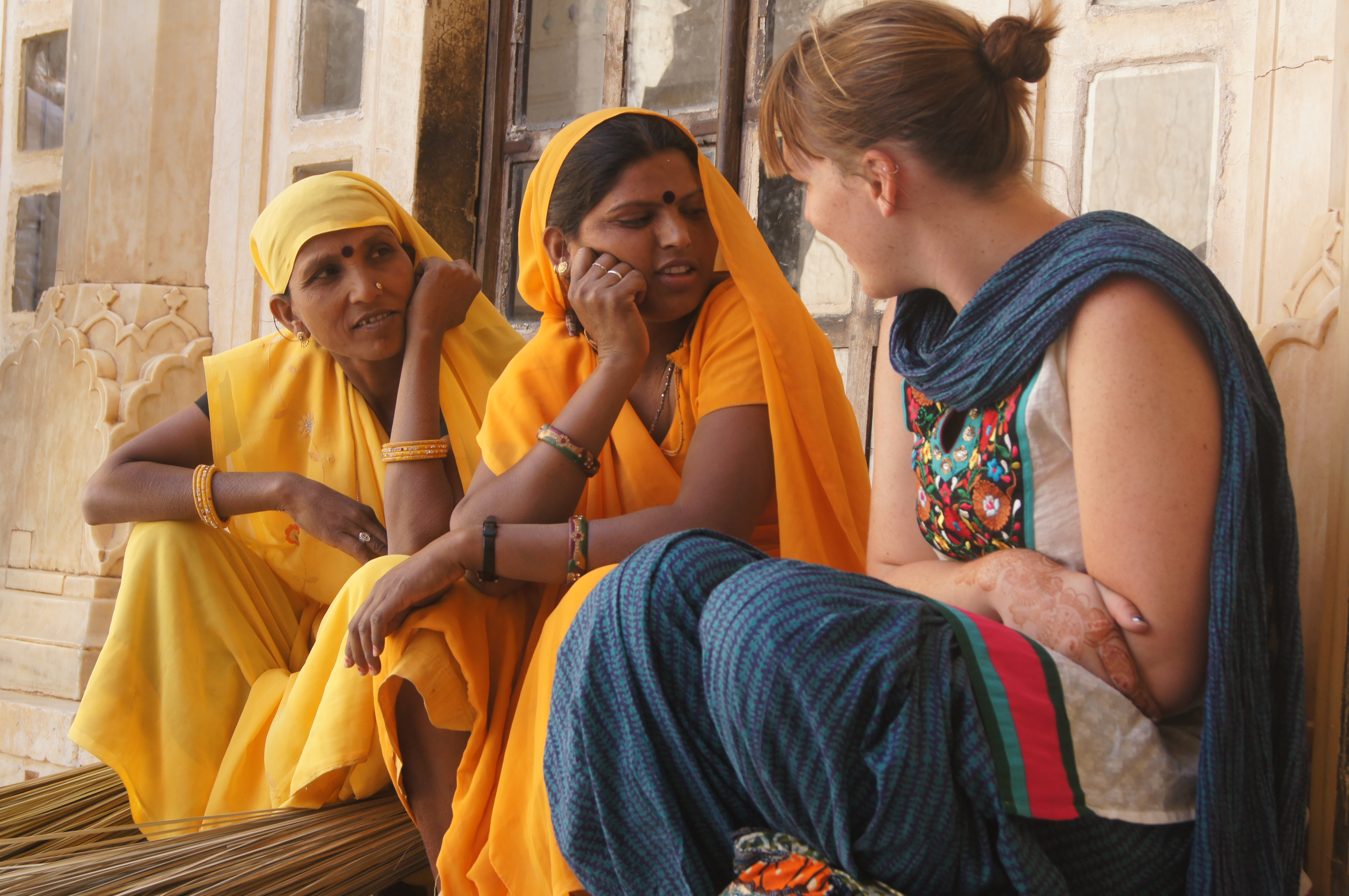
As someone who went on the same study abroad program three times, I always love to see students who just can’t study abroad enough. Haley from Suitcase on the Sidewalk fits that description perfectly. Now on her third of four overseas programs, I think Haley is the most “studied abroad” student I’ve come across. With a year in India, a semester in Ghana, currently in Buenos Aires, and now planning her semester in Prague, Haley is definitely experienced and adventurous in her travels. She has now been blogging for over a year and her posts cover everything from Argentine graffiti, to homesickness, to her series, Wanderlust Wednesdays. I was fortunate to catch up with Haley and ask her all about her study abroad adventures. Here’s what she had to say:

How did you choose your study abroad locations?

I can’t really take credit for choosing India; the Rotary program that I was selected for reserves the right to send you whenever they want or need to. They asked me where I wanted to go and I said, “Anywhere, as long as you send me!” My flexibility landed me a spot in the program, and was I eventually given a few choices off the beaten path. I picked India for the culture, for a taste of the exotic, but where I could still speak English.  (That part wasn’t so adventurous.)

As for my college study abroad locations, I still wanted to pick places that were less common, that I knew less about.  All the places I am studying have a campus for my college, so it feels a little like cheating. Language and classes have played a huge part in where I chose to go.  For Ghana, it had a lot of classes I wanted- a fine arts minor, some post-colonial studies classes, and it was a chance to see some of Africa. Argentina was a chance to explore South America, and to work on my Spanish.  I’ll be heading to Prague next semester, and I am actually following a specific teacher there, but there is some language flexibility and the chance of exploring Europe.  I have friends in Germany and Hungary I am hoping to visit!

Now that you’re in your third country, has the adjustment process gotten easier for you?

The adjustment is definitely less stressful, though it’s exhausting and scary every time I get on a place.  I’m luck that my friends and family are used to me traveling, and so I don’t need to email or skype all the time.

The best part of having some experience is knowing how to manage my time and my resources, so I don’t feel as overwhelmed my first few weeks. I have a more clear sense of my priorities- for me, going out to party is less important than traveling and exploring my new home.  I do some research and pre-plan some things I want to do, which I think isn’t as common but helps me feel grounded.

I’ve also seen my fair share of travel disasters- pick-pocketing and getting lost and being lost in translation- and I am still here to tell the tale.  That gives me a lot of confidence, even though sometimes I have no idea what I am doing!

From your post on 5 things to remember when studying abroad, what is the most difficult for you?

Never say no!  A dear friend from Rotary gave me that mantra and it has always served me well.  But I still sometimes find myself not buying a sandwich because I’m nervous to order in Spanish, or something equally squeamish.  The golden rule of study abroad is really “what you give is what you get,” and if all you give is “no,” you’ll find yourself only receiving “no” in return.  Saying ‘yes!” can be scary but I very rarely regret it- instead I end up with better experiences, better memories, and a better education in the cultural exchange.

How do you maintain relationships from home, India, and Ghana?

It’s not easy.  I had to make a resolution that I wouldn’t let the distance ruin my relationships with the people I care about.  My family is great, and at this point they treat my going away to study in another country the way other parents treat going to school a few hours away. I still miss them but the Internet is a life-saver, and now I can text my mom from Argentina with a smart phone.  How lucky am I? I also email my host families in India every few months.   It takes a long time for us to go back and forth, but we manage.

Friendships are harder, and take more work for me.  I have friends not just from my hometown, but from New York City (where I go to school), and also all the places I’ve lived.  Facebook is invaluable, as is email and skype, but what it really comes down to is putting in the work to maintain those relationships. I’ve learned I can’t expect people to chase me. I have to be the one to say, “I’m really interested in what you’ve been up to, can we catch up?”  I spend at a couple hours a week skyping and facebook-ing friends; for me it’s time well spent.

Looking back, what advice would you give yourself before all your adventures started?

Don’t be scared!  So many people allow fear to dictate their travel experiences- fear of being embarrassed, fear of failing, fear of the unknown.  I travel specifically because it scares me, and I think its important to face those fears and explore what the world has to offer.  My biggest fear when traveling is always looking stupid, which is the worse reason to not do something that I can think of- I’m still trying to outgrow it.  It would be much more reasonable to fear bodily harm or strangers, but India got rid of both of those fears.  I am constantly grateful that I took a gap year alone somewhere far away- I had so much time to mess up and recover and learn, and it was so different from everything I ever knew, that I can brush off a lot the fears that come with study abroad for the first time in college.   Aside from looking stupid, my greatest fear is not using my time abroad to my best advantage, and the two usually balance out well.
Abroad Blog of the Week: About the Author

Due to technical difficulties in Turkey, I’m having to go a bit off script for this Abroad Blog of the Week. I thought about highlighting a few blogs that I’m following but I would rather just make them an ABOW in the future. So when a friend suggested that I interview myself, I decided to take her advice. If you’re new to Global from Home, I am study abroad advisor who has decided to seek as much international culture as possible within 30 miles of my front door. If you’ve been reading for a while (thank you!), here a few facts I haven’t shared before.

What is the best part of being a study abroad advisor?

I love hanging out with students, hearing their adventures, and listening to them as they figure out their path and plans. There is something about the age bracket of 18 to 22 that I find energizing. Their lives are so dynamic and they have so many options and decisions to make. Plus the students I’ve worked with are incredibly creative and motivated. They amaze me daily and inspire me in so many ways. They are what make me want to go to work every day. Now that I’m currently not working in an office, they are what I miss the most.

If you could do it all over again, would you still have studied abroad in Italy?

Yes! As an Italian Studies major, Italy was really the only thing that made sense. Because I was so focused on the language and I went three times, I felt that I became acquainted with an Italy different from many study abroad students. It wasn’t so much about seeing the Coliseum or visiting the Vatican, but rather living like an Italian that was so important to me. The one thing I would change is that I would have gone for longer. I really wish I had lived in Rome for a full year.

How did you come up with the idea of Global from Home?

This past May I found myself a bit frustrated. I hadn’t been abroad in over three years and in all honesty, I was mad about it. Hubby’s job was really intense so he had little vacation time and because we had moved so much in the past three years, going abroad really wasn’t an option. I finally realized that I needed to stop complaining and look at what was around me. Living in San Diego at the time, international culture abounded. I thought that if I started a blog it would keep me accountable to seeking out culture. The blog has made me more intentional about going to festivals, cooking ethnic food, and building relationships with people from around the globe who just happen to live in my hometown.

Now that you’re in Oklahoma, what are your plans?

That is a bit up in the air but I have some thoughts. I do plan to keep up with Global from Home and continue to explore international cultures from OKC. I’m also applying for the PhD program at the University of Oklahoma in Higher Education with hopes to research the study abroad returnee experience. Currently I’m meeting with study abroad offices in the area to talk about starting a study abroad returnee conference. And finally, I’d like to start a Meet Up for people who enjoy exploring other cultures like I do. But in the end, I’m open to anything that comes my way that will allow me to help students have their own international experience.

What advice would you give someone who wants to be global from home?

Food is probably the easiest way to start being global from home. Google authentic recipes from a country you are interested in and try to make them. Research ethnic restaurants in your area and order the most traditional dish on the menu. Other easy ways to explore culture are to look for cultural festivals. The Greek Festival and Oktoberfest are pretty common ones to start with. If you are a reader, internationalize your reading list and add authors who are from a country you’ve visited. The same applies with movies. The most important thing is to just start and be intentional about adding culture into your weekly routine.

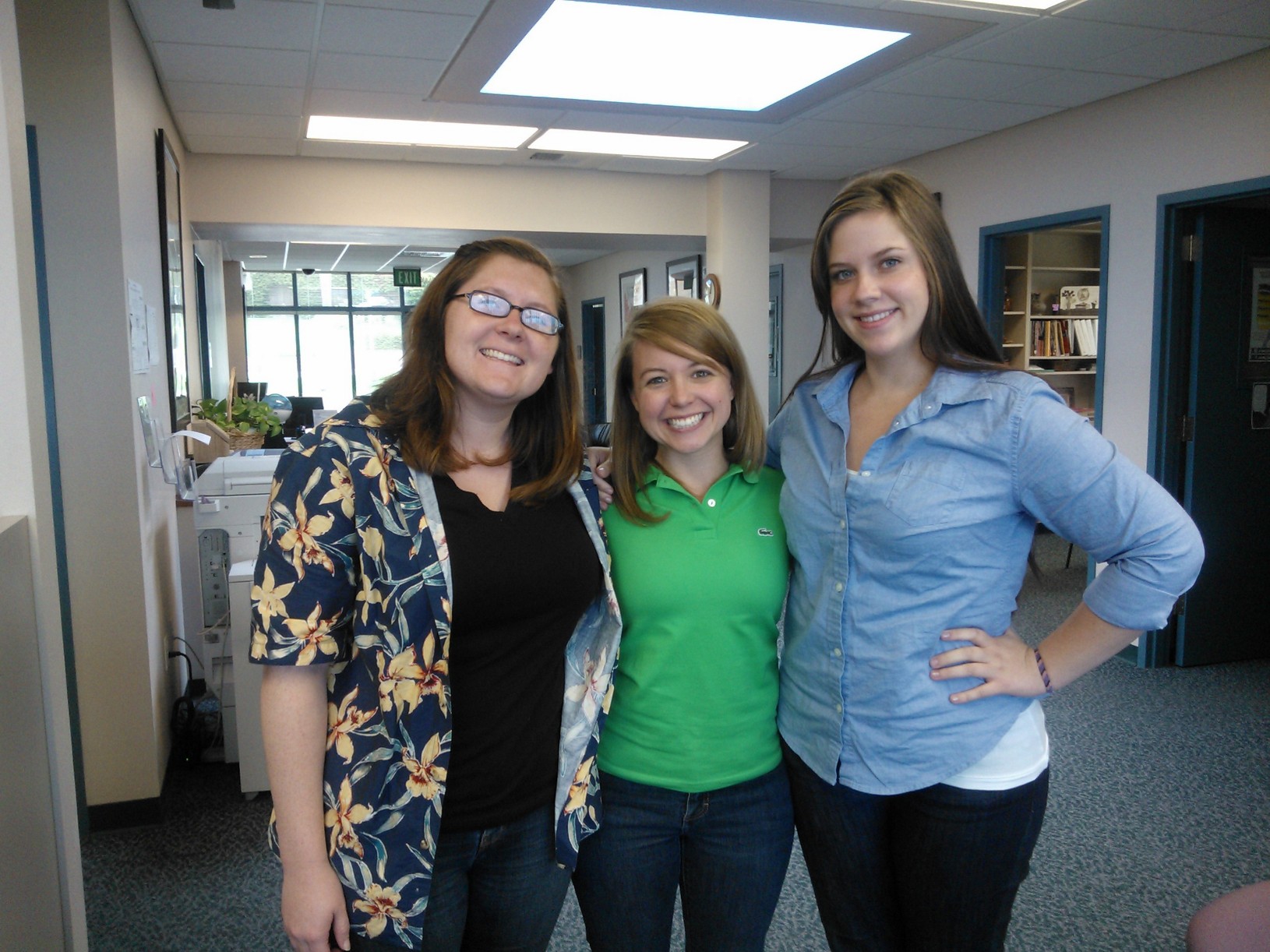
Me (in the yellow shirt) with three of my fabulous students

Abroad Blog of the Week: Take Me Down to the Panama City

I’ll go ahead and say it up front that I may be a bit partial to this Abroad Blog of the Week. Lindsay and Megan of Take Me Down to the Panama City were two my students in San Diego who are now headed to Panama for a semester abroad. With that being said, I have the unique ability to claim them worthy of your reader before their blog has really even gotten started. Their approach to studying abroad has been incredibly proactive. They took weeks to research programs, they went to every prep event possible, and they were regular attenders at all of my Friday lunches. The two are blogging for their university as a pair, something I haven’t seen much of in study abroad blogs. With limited access to technology in their host city, they will be posting about once a week and the fun all begins this coming week as they jet set from LAX. I was glad to catch up with two of my favorite study abroad bloggers before they hit the road for Panama.

Lindsay, me, and Megan

What will you be studying while you are in Panama?

Megan: Both Lindsay and I will be studying Tropical Island Biodiversity and Conservation Studies at the School for Field Studies. What a mouthful!

How did you two decide to study abroad together?

Lindsay:  We both changed our majors to Environmental Science in Fall 2011. We wanted to study abroad together because we knew it would be an easier transition having someone you are friends with in another country and situation with you. We became better friends and roommates through deciding to study abroad together.
Megan: It kind of just fell into place! We are both Environmental Science majors, so we were looking for the same type of program. Lindsay and I had already picked different programs when we heard that the School for Field Studies was launching a pilot program in Panama! The doors for our other programs began to close as the door to Panama began to open wider and wider. In the end, it turned out to be a program that encompassed what we both were looking for and the pieces fell into place! We are excited to go together as we have been roommates and friends at PLNU and look forward to have a little piece of familiarity and home with us as we embark on a new journey.

What will your living conditions be like?

Lindsay: We will be living on an island in the Bocas del Toro Archipelago and we are staying at the Smithsonian Tropical Research Institute in Bocas del Toro. We will be living in a dorm type building and have access to classrooms and a library on the property. However we will be living ruggedly as we are a 30 min walk from Bocas Town and have limited access to WIFI. Our research institute is in the middle of the rain forest but is fully equipped with necessary living arrangements.

What are three things you just can’t leave home without?

Megan: As I begin to pack I have realized that there are many things that I feel I can’t leave home without! One would be a bracelet that my best friend, who is also studying abroad, has the twin of. It has an elephant charm for good luck and safety. The second would definitely be my pillows! I am bringing my own pillow to sleep on, even though the station provides one for us, and my travel neck pillow. My little piece of home and comfort in an unfamiliar place. The third, I am a little ashamed to admit, would probably be my nail polish. I have sort of an addiction and have about 40 nail polish bottles in total. Obviously I won’t bring all of these, but it is probably safe to say that even in Panama, my nails will be painted to perfection!
Lindsay: My new Canon Rebel camera, my iPod, and this old black sweatshirt of my dad’s that I wear when I’m homesick or sad.

How have each of you prepared for living in Panama for the next four months?

Lindsay: We have been spending the last six months frantically buying new gear for various activities, getting the appropriate vaccinations and meds, and researching the politics and customs of Panama. I have attended many panels and discussion sessions in the study abroad office talking with past study abroad students about their experiences.
Megan: If we are being honest, I have not prepared near enough! I moved about 1,300 miles away from home to go to college, so I know a little what it is like to pack up and move away from your friends and family. Having said this, I have no idea what it’s like to pack up and move away to another country! I have been researching what it will be like and reading about other people’s adventures in an attempt to get a feel for what mine will be like. The most important thing I think I have done is to move into this experience with an open mind. I have tried to prepare for the unknown and get myself ready to experience things I never could have dreamed of!

What advice would you give other students who are considering studying abroad in a non-traditional location?

Megan: Do it. Even though I have not gone yet, I could not be more excited! You will always have an excuse to go to a traditional location later in life. People travel to Paris all the time for vacation or what have you, but how many people would go to San Jose, Costa Rica for vacation? Not only this, but many traditional locations have cultures that are more similar to ours than non-traditional locations. Great things can happen when you get out of your comfort zone and try something new!
Lindsay: I would encourage them to not be afraid of cultural and language differences. I would want them to research each country with vigor. I would hope that they would feel comfortable talking with other students about their experiences in non-traditional location. And I would stress that they look for God to open and close doors with each study abroad opportunity they encounter.

Abroad Blog of the Week: Mauled by Europe

Have you ever traveled with little ones? Then you will love this Abroad Blog of the Week. Jesse and Liz of Mauled by Europe have taken on the adventure of moving to Italy for three months for Jesse to do a design internship. What makes this adventure even more fun is that they are doing it with their two little boys who are both under the age of three. So far the couple has survived several flights, car rides, and after a stop in Denmark for a wedding, they are just now getting settled in Italy. If you are planning travels with toddlers you should definitely check out their post on sleeping with a baby on vacation and flying with kids. In addition to great posts on kid travel, you’ll also enjoy Mauled by Europe’s daily thoughts on culture, food, and living abroad. I was lucky enough to catch up with Liz via email and get some great advice on how to plan a three-month international move. Be sure to read our interview!

How did you go about setting up your life (housing, transportation, etc) in Italy while you were still in the States?

We searched all over the internet for furnished rental by owner and we came across one on airbnb.com that we thought felt cozy. It wasn’t the cheapest housing option but with two kids coming along too we wanted it to be comfortable and have everything we would need. Jesse is going to see about using a bike to get to work. It’s only 3 miles away on the map but we’re going to play it by ear when we get there and maybe he’ll need to rent a scooter? I guess we’ll see.

After your recent cross-continental flight with your two little ones, do you have any tips for success you’d give to traveling parents?

On our trip from Chicago to Copenhagen we packed a small rolling suitcase with diapers and toys and food. But we had to put it in the overhead compartment which you really don’t want to fumble around and grab it down a billion times. Now on our trip yesterday from Copenhagen to Bologna we only brought our small carry on backpack/diaper bag which fit under the seat in front of you. Sooo much nicer when you wanted to keep going in for food and milk and such. Also, even with the liquid restrictions you can bring in stuff for your kids like milk and such.
Also, about an hour into the trip, Crosby (our youngest) was so cranky and I started freaking out inside. I was standing by the bathrooms then in the bathroom while he cried and whined. I was thinking to myself, “Oh my gosh, I am going to have to hold a squirming crying baby in the bathroom for 7 more hours.” But if you just wait it out he’ll soon get tired.

How is your Italian?

We know zero Italian! We both took spanish in school but are nowhere near fluent, but we can pick up a few words. We’re hoping that this trip will give us, and more than anything our kids, a chance to pick up the language. We are going to try to get our almost 3-year-old into a Carpi preschool. Hopefully when we get back home in November we can keep Italian lessons going to give him an edge with learning a language.

Do you have any must-dos while you are living in Carpi?

My husband is going to be focusing on working which will be interesting going into a new job across the world. Interesting and very stressful! We both want to really learn how to eat and relax like an Italian. It also would be interesting to see child rearing differences between America and Italy/Europe. A few weeks before we left I quit my job so my husband could take this opportunity. So, I am looking forward to learning how to be a stay-at-home mom for the first time but also a stay-at-home mom in Italy!

 What advice would you give someone considering internships abroad?

When Jesse was looking for an internship abroad we literally googled “design firms abroad” and then applied to a ton of internships in really cool places and some not so interesting places all over Europe. Our first hope was to get one in Italy and then somehow he got this amazing internship in Italy. We’ll have to tell you more advice once he starts working. I know a lot of places in Europe have strict working restrictions and laws. Some where they can’t hire outside of citizens or ones where they can’t offer internships. We are also going into this whole adventure with the mindset that we’re not really sure what we’ll get out of the living/working in Italy. But as long as we just remember that this our chance to do something different and change the way we think on a daily basis, then the trip will be worth it in the end.

Abroad Blog of the Week: Our Dear Lady Expatriate

This Abroad Blog of the Week comes from one of my dream locations: Cambodia! Our Dear Lady Expatriate (or ODLE for short) was introduced to me by a study abroad colleague and friend, and I’ve now been reading her posts for several weeks. Although ODLE’s blog is just a few months old, her experience living abroad and teaching English is extensive. After living in South Korea for several years, she now finds herself in Cambodia and exploring her new host country. Her blog is full of fun fashion for the ESL teacher, weekly recommended links, and expat tips for living in Cambodia. I was able to catch up with the fun-loving Our Dear Lady Expatriate for a virtual interview and learn more about how her expat life all got started.

1. What got you started teaching English abroad and living the expat life?

I grew up in rural Ontario, and I never knew that a life like this was possible. I remember the excitement of going to university in Ottawa and thinking it to be such an immense city. During first year, I vividly remember attending a free information session about teaching ESL abroad and having my universe split open with possibilities. After the info session, I went straight home and wrote my Mom a 3 page email trying to persuade her to let me ‘take a break’ from university and go travel. Her reply was a definitive ‘no way’, and that was that…
…Until, in fourth year, I was connected, via a mutual friend on Facebook, to a rather handsome fella who was living and teaching in England. A whirlwind long-distance romance ensued, and despite only having ever visited each other for three weeks total over the next year, we made plans to run away together to Korea as soon as I graduated. Somehow we made it through the first year of getting to know each other in a foreign country while living in a studio apartment, and have been happily rambling about ever since.
So, at first, teaching was really just a tool that I used to attain the traveling life I desired. Since taking that initial contract, though, I’ve found that I was lucky enough to stumble upon my passion, and now teaching English is so much more than just a way to fund a ticket: it’s my chosen career, and I couldn’t be happier.

2. You’ve been abroad for some time. What made you decide to start your lovely blog just a few months ago?

Combine the fact that I’ve been obsessed with reading blogs for years with my general propensity towards writing, brainstorming and ‘doing,’ and I’m surprised it’s taken this long, too! Partly, I credit a couple of blogs that I’ve recently found and deeply connected with. Both the diverse mix of content on Yes and Yes and the work ethic of the girls at A Beautiful Mess have been inspiring, as has the success of each of these blogs and the strong community aspect of each.

Really, I think the ‘aha’ moment came when I was trying to find blogs in the ’20-something female expat living in Cambodia’ niche and came up empty. In fact, there are so many great backpacker blogs discussing this region (Grrrl Traveler, for one), but it can be a bit tricky to find quality stay-put-expat lifestyle blogs that regularly post. The discovery of this massive gap really acted as a swift kick to my behind to try my hand at generating my own content.

3. With your adventure-seeking taste buds, is there any type of food in Cambodia you won’t try?

Actually, I’m afraid you’re giving me more credit than I’m due! In any group, I’m bound to be the least likely to try the ‘odd’ items on the menu, and up until about a year ago, I was totally vegetarian. I constantly feel less than adventurous when dining out with my Partner In Crime, who tends to zero in on dishes like “Sea Cucumber Covered In Black Ant Sauce”. HOWEVER. One of my upcoming goals before my 27th birthday (the rest of which will be announced at the start of September on my site!) is to try frog, and another is to give fresh durian a proper go. Maybe they will be the turn-over-a-new-leaf moments that I’ve been waiting for? I really would love to amass some crazy food stories to shock my Grandma and my buddies alike! Stay tuned!

4. How has your move to Cambodia been different from your move to South Korea?

Personally, the first time I moved to Korea, at age 21, I had absolutely no idea what I was getting myself into. All I knew was that I was moving there with this guy who I was pretty sure I was in love with, and that it was a foreign country, bound to be chock-full of adventure. As aforementioned, the prospect of teaching really didn’t have that much to do with anything at that point. Now, discovering new systems of education in each country is a major part of the appeal, and I’m excited to have the opportunity to try out different methods, such as Montessori. Experience has also bestowed a confidence in myself that I know I’ll be able to hack it anywhere, which was glaringly absent throughout that first year in Korea!
Logistically, the two are very different. South Korea requires a lot of prep while still in your home country, but your travel expenses are paid and you walk into a life that’s been set up for you. In Cambodia, you hand out resumes in person and need to take care of travel and lodging yourself. In hindsight, I’m glad I got my expat footing in Korea before being left to my own devices in Cambodia.

5. How is learning Khmer going?

Well, I’m a month and a half into living here, and I’ve got the essentials (like giving directions) figured out, but little else. I’ve gotten a lot of use out of the bits and pieces that I know, though! Truly, every time I’ve attempted to speak in Khmer, I’ve gotten a lovely reaction from the listener, even if I’ve botched it. It’s very encouraging, and I’ve really been motivated by sincerely wanting to speak with the people around. The focus of the first couple of weeks was to set up my little life and to nab a job or two, and now I’m ready to dig in, starting with working on the pronunciation of common sounds, which are quite distinct from English. I’m keen to have my students stop giggling when I butcher the pronunciation of their names when calling attendance!

6. Do you have any “learn from my mistake” advice for future ESL teachers/expats?

For anyone moving to Korea, I would absolutely recommend putting the few days of study into learning how to read Hangul. It’s not nearly as difficult as you might imagine, and it will give you such a greater sense of belonging in your new home. I also generally found learning Korean gave me more empathy towards my students. The icing on the cake is that it will never fail to impress people (outside Korea) that you can phonetically read another alphabet! I wish I’d put the effort in the first time around.
I would also say that if you’re living in South Korea, there’s little excuse for not saving half your pay check. I didn’t do this the first year, and I cannot tell you where that money went. Cute stationery and hair bows? I don’t know! That’s something I did entirely differently the second year I lived there: every month, on the day I was paid, I would immediately send a pretty sizable chunk to my Canadian bank account. Soju’s cheap, Korean restaurants are cheap, transportation’s cheap, renting singing rooms is cheap – use the opportunity to bank some cash and fund some amazing future travels!

Thanks Our Dear Lady Expatriate for the interview!

Abroad Blog of the Week: Brilliant London

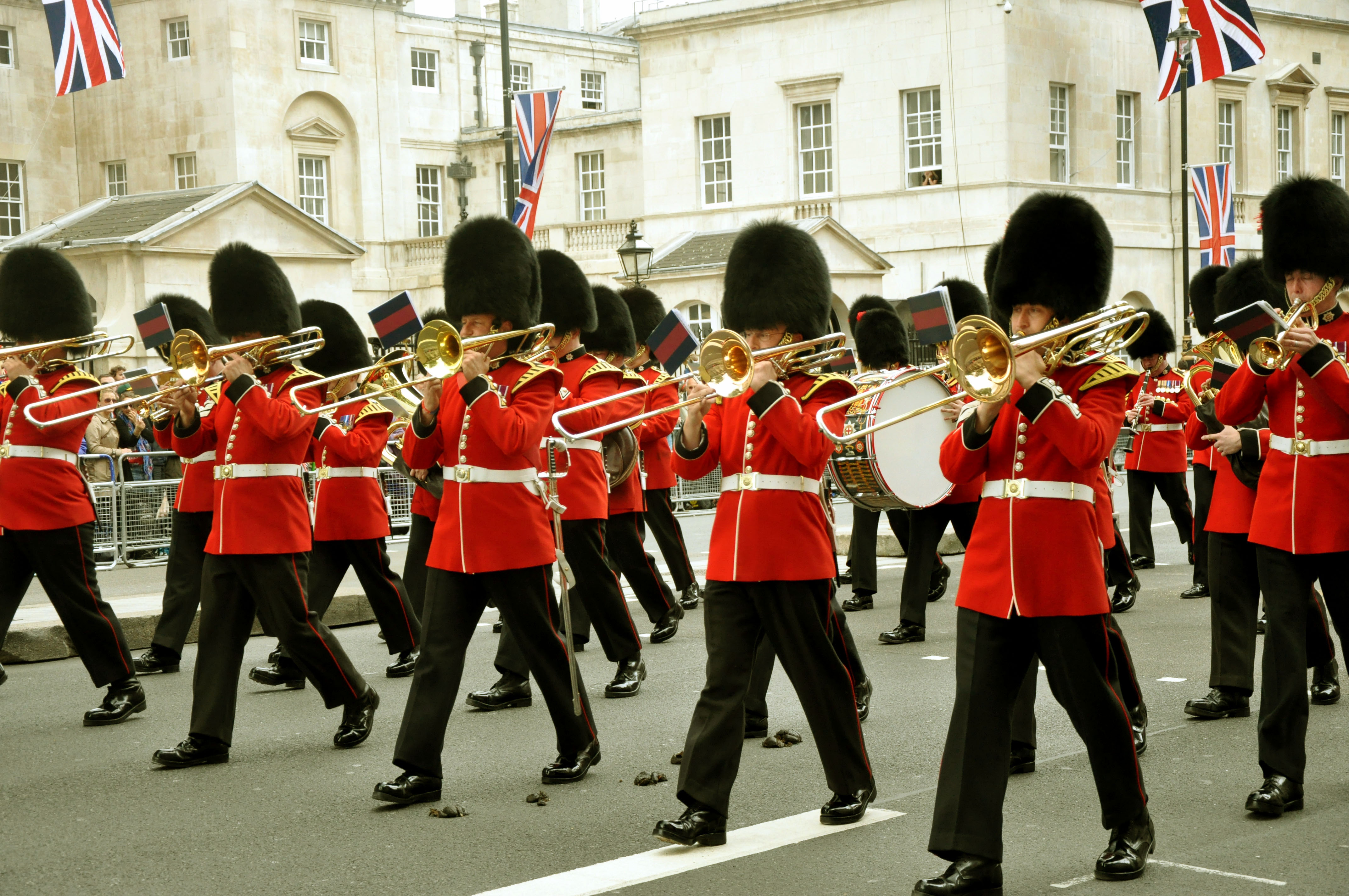
Just because the Olympics are over, doesn’t mean there isn’t more fun to be had in London. This Abroad Blog of the Week proves that is a fact. Ally of Brilliant London is an American expat who has made it her goal to discover London one photo and one day at a time. Her daily posts are easy reads and include pictures, history, and fun facts about various landmarks and events throughout the city. Some of my personal favorite posts were of the Diamond Jubilee. But what I like most about Brilliant London is the variety. You can find the famous tourist spots on her blog, but there is even more of the unknown, less-frequently visited diamonds in the rough. If you’re planning a trip to London, this is definitely a blog to reference. I was fortunate to virtually chat with Ally and get some further tips on exploring London. (Thanks, Ally!)

What made you decide to start Brilliant London?

As American expats, our time in London is limited, and knowing that we will be returning to the States within the next few years, I found myself determined not to miss anything. We are so fortunate to have this opportunity, and I don’t want to return home knowing that I didn’t take advantage of all that London has to offer. I decided that making a commitment to writing about one location a day would be a good goal, and after more than 150 posts, I have just begun to scratch the surface! I am learning so much, and all of my research has provided me with some excellent trivia and party conversation…’did you know that London actually averages less rainfall per year than New York City?’ or ‘did you know that The Queen has owned more than 30 Corgis during her reign?’ See? Isn’t that useful table talk?!

 London has been a busy place this summer. What has been your favorite event of the summer?

 I have to confess that I have been blogging from the States this summer as we like to come back and see our friends and family while school is out, however, London has been a busy place all year! What excellent timing we have had for our adventure! I was among the crowds lined up along the streets to watch Kate and William’s Royal Wedding Procession, and I was again up at the crack of dawn to wave to The Queen as she passed-by for her Diamond Jubilee Procession. Everything has been so festive in London from the hundreds of union flags strung-up along Oxford Street to the giant Olympic Rings hanging from Tower Bridge. I think my favorite event, though, would have to be attending the Queen’s Diamond Jubilee Concert at Buckingham Palace. I will never forget it!

On all your adventures through London do you prefer to go with friends/family or solo?

 We do a lot of exploring as a family, and I like to meet up with my friends for a good museum exhibit or theatre production, but I tend to head out on my own during the week to explore the city and take photos for Brilliant London. I map out a specific area, mark a few landmarks, and see where my camera takes me. I love when I find a hidden street or alley that just looks like the London we all picture from Charles Dickens or Sherlock Holmes, and I have taken thousands of photos since I started this project.

 Where do you get the best fish and chips?

 We love fish and chips! My favorite spot is fish! Kitchen in Borough Market. It is a traditional takeaway counter, and the atmosphere is fantastic! The kids like to watch them batter the fish behind the counter while we wait, and then we can wander around the market afterwards. A great day out!

 What advice would you give someone who is moving abroad to London?

 First of all, if it is your first time living abroad, cut yourself a break because the details of moving are huge and stressful! Once you get settled-in, though, it can be one of the best experiences of your life. Our family moved from the American suburbs, and we made some important decisions that we don’t regret. We live in the city, near an underground station, and we don’t have a car. London is a very easy city to get around without a car, and our children have become incredibly independent while living in the city. Our lifestyle has changed in the following ways: I grocery shop at the neighborhood market everyday, as our refrigerator is tiny; I do laundry everyday, as our washing machine is tiny; and we spend a lot of time out exploring the city as our house is tiny….are you beginning to get the picture? Other than the lack of space, it has been very easy to adjust from America. For me, London is all about the history, live theatre, museums, international foods, the parks, and the Royal Ceremonies. If you have the opportunity to live abroad in London, go for it, and explore, explore, explore! London is Brilliant!

Abroad Blog of the Week: News from a Broad

I love when I find a blog that makes me think, “Wow, I hope I could do that someday.” This Abroad Blog of the Week definitely falls into that category. News from A Broad is written from the beautiful colonial town of Merida, Mexico by Benne’, an art therapist who picked up her life in Texas and moved abroad. Her blog intertwines art therapy projects, life as an expat, culture experiences, and simple inspiration. Benne’ starts each post with a quote and from there, paints a picture with her words. I was fortunate to connect with Benne’ through the blogosphere and ask her a few questions about life in Mexico as an expat.
.

You took some time to explore Mexico before you settled down. What was your criteria for your new home town?

Yes, I explored most of Mexico over 20 years before I discovered the Yucatan Peninsula.  I was looking for a city that had colonial charm, an international airport, contemporary arts & music spaces, as well as deep cultural roots.  Merida is steeped in historical connections between the Maya and Spain.  Having grown-up in New Orleans, Merida captures my love of Spanish and French architecture.

Now that all of your belongings have made it to Merida, what were you most glad to have back?

Two years is a long time to have things in storage.  Even with a detailed manifest, I don’t think I had a solid memory of my own belongings.  When I opened the tote with pictures of my children, spanning their entire lives, I was emotionally flooded.  I had visited with both of them just a two weeks prior.  We are all in our adult lives!  Their images took me to times when their little toes looked like nibblets of corn – precious enough to bite!

How has art therapy helped you adjust to your new life?

I’ve been an artist my entire life, and an art therapies for half.  I find that my creative processes has given me a way of manifesting, through my own creation, the life that I want for myself.  The last six years of my career in the US was spent counseling children in very high risk living situations.  Taking a one-year hiatus to build this life in Mexico has given me an opportunity to recover from the vicarious trauma therapists often experience when working with trauma victims.  Looking at every step required to make this move as creative acts, and particularly the steps over the last year, has helped me allow the process of immigration to unfold without my help!  Art Therapy often pushes us out of our own way.

Do you think it is ever possible for an expat to feel like a local in their adopted city?

I do think that it is possible for expatriates to feel fully integrated.  I had many friends in Austin, Texas that did the reverse of what I am doing.  We crossed the same river, with similar dreams.  I have an increased level of compassion for those friends, and to be honest, my comprehension of how daunting the process can be, has left me in a state of awe.  Those friends made incredible journeys.  They arrived with minimal language, and limited resources.  Under these conditions, they shaped their own experience, and marked the lives of those around them.  I suspect, that an immigrant will always be a bit of an outsider simply because there are cultural was of understanding words, that a language class can never capture.  However, at the root of all people is a core that side steps words, and that is where the deepest connections exist.

What advice would you give someone who is contemplating the life of an expat?

It will lower the stresses of daily living if you have at least a rudimentary understanding of the language of your new country.  You will have more fluid interactions, a wider selection for friendships, and a much easier time adjusting to the cultural differences.  Visit your adopted country as often as possible before you make the final move.  I know a few people who just made that leap of faith and have done fine, but the majority of those that have decided to start over, and by that I mean shedding all connection with their former lives, end up unhappy, never fully adjusting to their new life.  Go beyond expecting change from your move!  Make the efforts to court the dynamics that will alter you.  By this I mean take risk like getting lost on a drive, learn to ask for help, and just revel in the vulnerability!

News from A Broad Quilt

Abroad Blog of the Week: Folded Cranes

If you are looking for a good daily dose of worldly inspiration, I would highly recommend this Abroad Blog of the Week – Folded Cranes. I’ve now been following the posts of the blogging duo, CIA & PJD, for a little more than 6 weeks. The couple’s posts are interesting and diverse ranging from architecture, food, art, and music all infused into their international adventures. Now living in the heart of Europe, this couple who hails from Australia and New Zealand frequently finds themselves traveling and exploring cities far beyond the guidebook recommendations and folding cranes as they go. I was able to catch up with CIA & PJD for an interview about their blog and travels. Be sure to read their tips at the end!

1. Where are you now and where are you off to next?

We’re currently living in Leiden, The Netherlands. We’ve been here for almost two years now, and it’s a great little city to live in! One of the things we really love about living here is the rich depth of history in what surrounds us – daily we walk by buildings which date from the 1500s and 1600s, which just seems incredible to us having moved here from New Zealand, where such a sense of ancient history isn’t tangible. Here, windmills, canals, bicycles and stroopwaffels are daily parts of life! Leiden is also known as a museum city – because of the density of museums located here. This works really well for us because we love exploring museums, be they history or art museums, or on some other obscure focus! One of our favourites is the SieboldHuis Museum, which showcases Japan and Japanese culture, highlighting some links to the Netherlands. Recently we went to an exhibition there of origami work by the Grand Master of Origami – this was amazing for us! We also love to spend time in the Hortus Botanicus,  incredible botanic gardens in the heart of the old town, established in 1590. The range of unusual plants there is incredible, and there are lovely spaces to while away the afternoon in the sunshine or snow, depending on the season!Leiden is a great place to live as well because of it’s proximity to other cities in the Netherlands via the train links – 30 minutes and we’re in Amsterdam or Rotterdam, 10 minutes to the Hague, and 45 minutes to Utrecht. Oh an 15 minutes to the international airport if we are heading off to explore somewhere else in Europe! Our next travels are to Switzerland for a weekend in August to hang out at a music festival that we are super looking forward to, as a chance to hear some of our favourite bands play live is always something we both love.

2.  You said once that you had started a blog before. What’s different about Folded Cranes that works for you?

Yes! We used to have a tumblr, but we found that the interface didn’t quite work for us so well. We set up that blog after we moved to the Netherlands – mainly as a way to post a few photos and words about what we were up to for our family and friends back at home. But we found that after a while we didn’t post as much as we wanted to, and we also wanted to write about things wider than what we had originally begun the blog for. So it evolved, and we decided a refresh was in order, that’s what led to us starting foldedcranes.com. We resolved that we’d try to post every day or at least once every two days, that it would have a broader focus and would be a chance for us to collect things that inspire, intrigue and interest us, and that we’d put ourselves out there for a (potentially!) wider audience. It’s been great to hear so many encouraging comments from our readers, and to share and swap ideas.

3. Since you’re blogging together, how do you decide what to post?

Blogging together is a great way to run a blog for us, because we have so many interests in common, but also many areas where we have different interests. So the blog is a way that we can bring all these together, which hopefully leads to something interesting and that people will enjoy! It’s also a nice record for us – we are heading towards 100 posts on foldedcranes.com now and it’s going to be nice to look back at some of the things we have written about and discussed over the past few months, and to think about all the ideas and things we want to include in the coming weeks and months! We don’t have a strict timetable of who posts what – it’s more of an organic process, that when one of us has a post idea they go for it, and sometimes we toss around ideas together. Generally we try to keep it fairly balanced with posts from each of us day about, but if one of us is particularly busy with other commitments that means they can’t post that day, then the other is always more than willing to pick up the post for the day. Occasionally we write the odd post together – which is always a really nice process too, making sure that both of our voices and ideas come through in the content that’s eventually posted online!

4. What do you do with all those cranes?

Ah, that is a good question! Well, many of the cranes, we have collected in a couple of clear glass containers/vases in our house, they make a nice centrepiece and are just nice to have around as inspiration! When friends and family visit, they are always intrigued by them. Sometimes, a crane ends up keeping us company on our desks at work, and sometimes they are given away to friends. Earlier this year we folded a heap of cranes for a very special occasion: our wedding! Each guest got a crane folded by us, which most people seemed to find quite special. We’ll be sure to write about this lovely day on our blog one day soon so stay tuned if you’d like to see more…

5. What advice would give someone trying to decide where to go on their travels?

Ah, we could probably talk all day on this topic! But we can boil it down to a few main tips, ten to be exact:

1. Open your mind when you travel: be ready for new experiences, and try to embrace them – especially new cultures, sounds, sights, smells, tastes. Be willing to go with the flow and adapt to unexpected situations – they always happen when travelling!

2. Be respectful of cultures that might be different to yours, and recognise that its a privilege to be able to travel into places that are completely different to your home. Learning a little of the local language, even if just a few phrases, really does go a long way, and will stand you in good stead if you run into any trouble!

3. Try and get local tips – even for good places to eat, or sights that might be a bit more off the beaten track and less touristy. These can often be the hidden gems that really make your trip! We also really like a couple of online travel guides that give tips from a fairly local perspective: for example the website http://www.spottedbylocals.com for various European cities can have some good tips, as can http://unlike.net/ which goes wider than Europe (some Asian and American cities). We also like the travel tips  and stories on the Guardian’s travel section: http://www.guardian.co.uk/travel.
4. Tip 3 above notwithstanding, make sure you do see some of the major sights that might be more traditionally touristy – they are usually so popular for a reason! But if possible, try and check them out at non-peak times when they’re likely to be less crowded.

5.  Do your research before you travel – but don’t over-research, sometimes it’s nice to be spontaneous as well as being well-prepared! Also, it’s really handy to always check opening hours of that particular musuem or sight that you just can’t miss – before we started doing this we had a few well-remembered instances of getting somewhere only to find it had shut because of changes to seasonal opening hours or a particular day of the week when it was not open. Checking ahead can help avoid travel-disappointment! Some also will have free opening times that can be handy to take advantage of!
6. When the unexpected does happen, take a deep breath, keep calm, and recognise that it’s probably not the end of the world…

7. There’s a time and place for rushed travel, when you just have a few short days and you want to tick off some key places. But on the whole we prefer to take a slow-travel approach – spending a few days (or as many as possible!) in one city or place really does allow you to take time to walk around lots and to soak up the feel and atmosphere of the place.

8. For short or weekend breaks, e.g. in cities in Europe, many offer great deals on city passes which give access to public transport and museuums, art galleries and other sights. Sometimes these are really worth investing in and can save time and money. We’ve taken advantage of these in Paris, Stockholm and Berlin, and not been disappointed. In Paris especially, we loved that the pass allowed us to skip the (often long!) queues at places like the Louvre, and go straight on in!

9. Travelling alone can be exciting and a great way to explore the world. It can be a way to really grow as a person and we have both enjoyed this in the past. Now though, we love to travel together. Our advice here though would be to make sure that your travelling companion is someone on the same wavelength as you, and who you know you can rely on to have fun with!

10. As well as capturing it on film, make sure you take the time to enjoy the moment – soak it up as much as you can, as well as spending some time looking through the viewfinder on your camera! Oh and remember to try and post a few postcards home to family and friends – they’ll love to hear how you are and to share in your travels vicariously from a distance.

Thanks Folded Cranes!

Abroad Blog of the Week Nominations

With moving, Mexico, and a residual stomach bug I am a bit off this week and now I’m running behind. While I’ve been emailing with a few bloggers, I have no abroad blog (yet) for this week. Bummer. But like the greeting card says, “When life gives you lemons, stick them in your bra.”  I figured I could use this opportunity to get some nominations for future Abroad Blogs of the Week. So here is the deal:

Criteria to be an Abroad Blog of the Week:

  1. The blogger must either be about to go abroad, currently abroad, or recently returned from abroad
  2. The blog must predominately be about culture/travel
  3. Posts should be fairly regular (at least once or twice a week).
  4. It has to be interesting

Requirements to be an Abroad Blog of the Week:

  1. Let me ask you 4-6 questions via email
  2. Send back your responses by the following Monday
  3. If you want (i.e. this is not a requirement), welcome any new readers from Global from Home the day I post our interview.

Easy, peasy.

If you would like your blog to be an Abroad Blog of the Week or know of another blog you think I should scope out, let me know! You can comment on this post or email me at elisehblalock@gmail.com.

Want to learn more about the Abroad Blog of the Week? Check out these previous editions:

Abroad Blog of the Week: Partners for Peace

I came upon Partners for Peace about a month ago when I did a tag search for Peace Corps. While I don’t know that the Peace  ever fit into my life, I do love reading about others who have delved into the two-year journey. For Mari and Paul of Partners for Peace, this adventure has taken this married couple from NYC to Palmar, Ecuador. Despite connectivity issues, M&P post regularly and give a ton of detail about being a Peace Corps Volunteer. I first started reading their blog when they were opening a pizza parlor in Palmar (great posts), but since have gone back and read their engagement story and process of applying for and getting placed with the Peace Corps. If you are even contemplating the Peace Corps, Mari and Paul’s blog is definitely one to read.

I caught up with Mari and Paul this week via email to ask them a few questions about their lives in Ecuador with the Peace Corps. See what they had to say!

What are the best/most challenging aspects of your Peace Corps assignments?

MARI: One of the best aspects of my Peace Corps assignment is that I am able to combine several of my skills and passions into individual projects. For example, I am working with a women’s artisan cooperative called Mujeres Cambia (http://mujerescambia.com). Members of the group make incredible hand-made jewelry out of recycled paper. You can’t tell by looking at it that it is made from paper. Most people think the beads are made of glass, ceramic, or wood but they really are made of paper! I am able to share my love for making things with my hands (I used to be the executive director of an arts nonprofit in Brooklyn, New York) at the same time I am able to design promotional materials and a marketing strategy for the group. Further, I am constantly motivated as the women learn new business skills like branding, accounting, promotions, and inventory.

One of the more challenging aspects of service is that while we act as catalysts for change we are also forced to change a lot in our current context, too. For instance, I was used to being a very independent woman in New York City – walking around alone, sharing household chores with my husband, traveling wherever and whenever I wanted, working outside of the home – and many of these activities are less common for women in my particular town. I am in the privileged position of being from somewhere else so I am given a pass on most of these things but I am often the exception acting in this way.

PAUL:  The reason I joined the Peace Corps is that I wanted to do something different with my life. Mari and I were happy in NYC but we were restless and looking for adventure. We wanted to live abroad, learn a language and at the same time do some good. We find ourselves 2 years later in paradise. We are on the beach, working with an incredible team and couldn’t be happier. I agree that our most rewarding project is with the women’s group, Mujeres Cambia. Everyone who sees their pieces does a double-take. It is an
incredible gift to be working with such talented women.

Who has helped you adjust to your life in Ecuador?

MARI: One of the reasons I feel so fortunate to be serving as a Peace Corps Volunteer at this stage in my life is that I get to do it with my best friend and partner, Paul. Serving as a married couple means that we can collaborate on projects (we help each other on all of our projects even if one of us is the lead), take care of one another when we are sick, share household chores, and serve as each other’s support system.  I thought about applying to the Peace Corps after college but now I can’t imagine this experience without Paul!

PAUL: What Mari says is true. While many of our peers are here alone I am here with my best friend. Together we are learning about the culture of Ecuador as well what it means to be a Peace Corps Volunteer. In reality, it is also challenging because Marisa is a superstar so it’s sometimes hard to keep up. I strive to keep up with this powerhouse motivator, facilitator and designer but enjoy having a role model by my side.

You recently helped open a pizza parlor in Palmar. What are your favorite pizza combinations?

MARI: Pineapple is really popular here so we have that as an optional topping at Palmar Pizza. We also have pepperoni, ham, and vegetables. In my old life in Brooklyn, though, Paul and I were fond of a local pizza place that made a corn, goat cheese, and basil pizza. Often, we would buy pizza dough from our local pizzeria and make our own version of that pizza. I don’t know if the local taste buds would go for this one, but you never know!

PAUL: Helping start a pizza restaurant was a rewarding project where we designed and built out the space and of course perfected a recipe. In Palmar, because most people have never had pizza before we wanted to stick to the basics at least at first. In 2013 look out for shrimp pizza at a Palmar Pizza near you!

If received a care package from home, what would you want in it?

MARI: Wow! This is hard. This mythical perfect package would have to include some comfort food like home-baked cookies with dark chocolate chips, pad thai (not sure how well that would do in the mail) as well as some practical stuff like the new Polaroid digital instant camera and a bunch of Sharpie marker variety packs for the ladies of Mujeres Cambia. It would be nice to have other fun stuff to make me smile like pictures of my two nephews and one niece, recipes from my mom and mother-in-law, and actual written letters from all of my closest friends.

PAUL: My parents have been sending incredible care packages these past couple of months. We usually look forward to simple things like suncreen, cookies, or towels and always look forward to any hand written notes. I am also always excited about things that support our projects. Now I am trying to solicit old smart phones from friends that we could use for our business projects where we do accounting and inventory by hand.

What advice do you have for someone applying for the Peace Corps?

MARI: I would say “Go for it!” It is never too late to apply. We thought that since we hadn’t applied right after college that we had missed the boat but that’s definitely not true. The average age of a Peace Corps Volunteer has increased steadily (I think it’s 28 now) and they are encouraging more married couples as well as retirees to serve.

Also, it’s important to talk to current and returned volunteers. We hosted a potluck at our place for returned volunteers as we were filling out the application. We also spoke with people who had volunteered through other organizations. In the end Peace Corps was the best fit for us and they accepted us so we couldn’t feel luckier.

PAUL: I am on the same page as Marisa, “Go for it!” When we were thinking about Peace Corps we had been out of school for years, had stable jobs and a comfortable life in New York. We were content and happy. Doing something radically different like Peace Corps was risky. It meant not just leaving our jobs but being away from our family and friends. We couldn’t pick where we would live or what we would be doing. There was a chance we may not like our site. There was a feeling that we are giving up a great deal of control over our own lives. But thinking about the past couple of years in New York (which seemed to blur together now) it seemed like having a big change like this would be a way to challenge us. It would be a way to have another type of experience and of course an adventure. Adventure bound, as always.

Thanks so much, Mari and Paul!