-
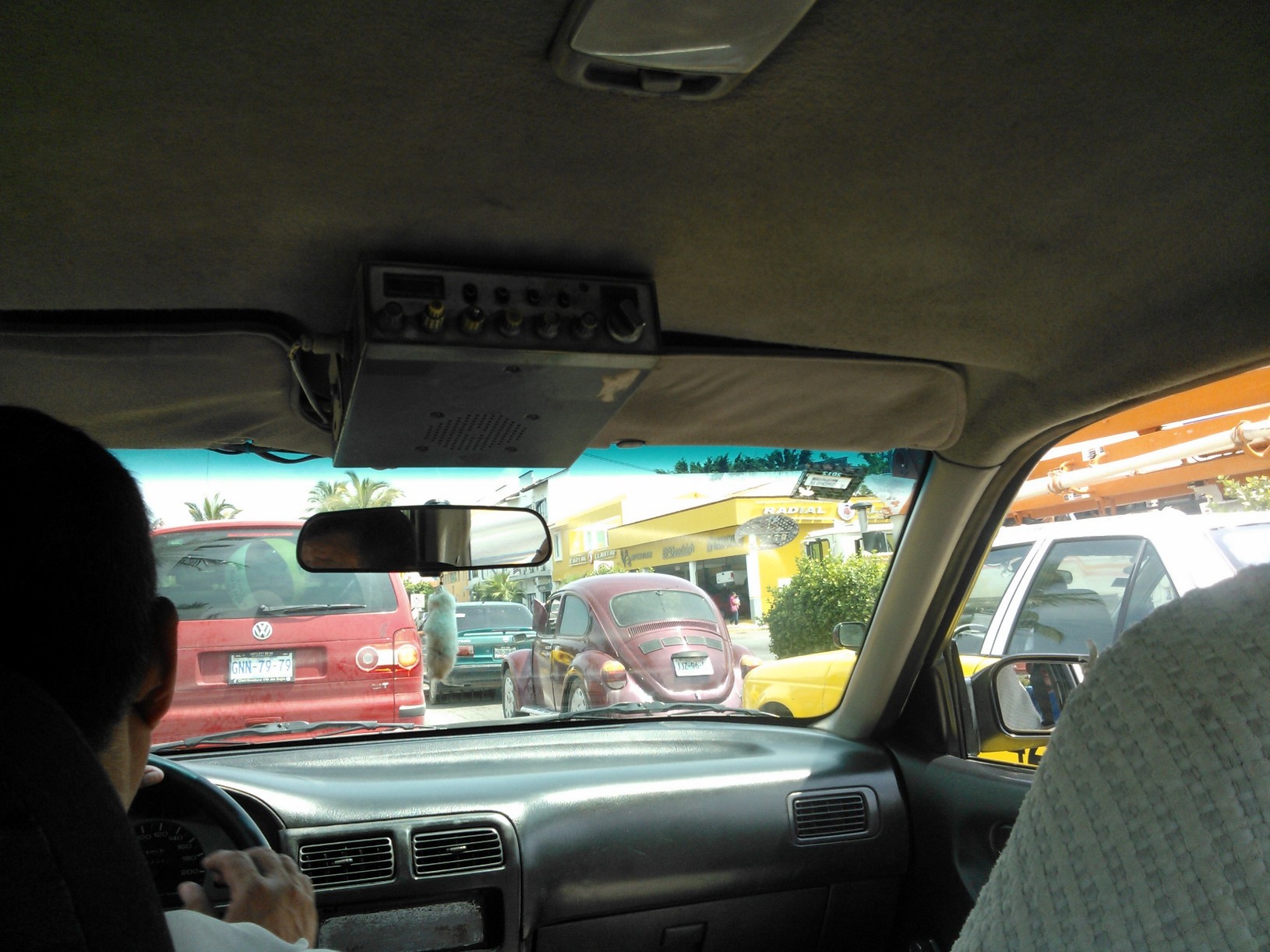
Do not play Punch Bug. For some reason the VW Beetle is a very popular automobile in Puerto Vallarta. You’re shoulder will end up pretty sore.

-
Saying “buenos dias” is just plain old common courtesy. Whether we were entering a store, the elevator, or passing someone on a small street, everyone said “Buenos Dias.”
-
Locals eat really early. If you want a good local meal for dinner, plan to eat around 5pm because most restaurants close at 6pm.
-
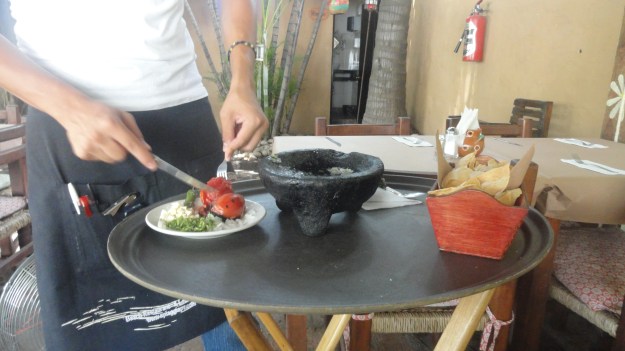
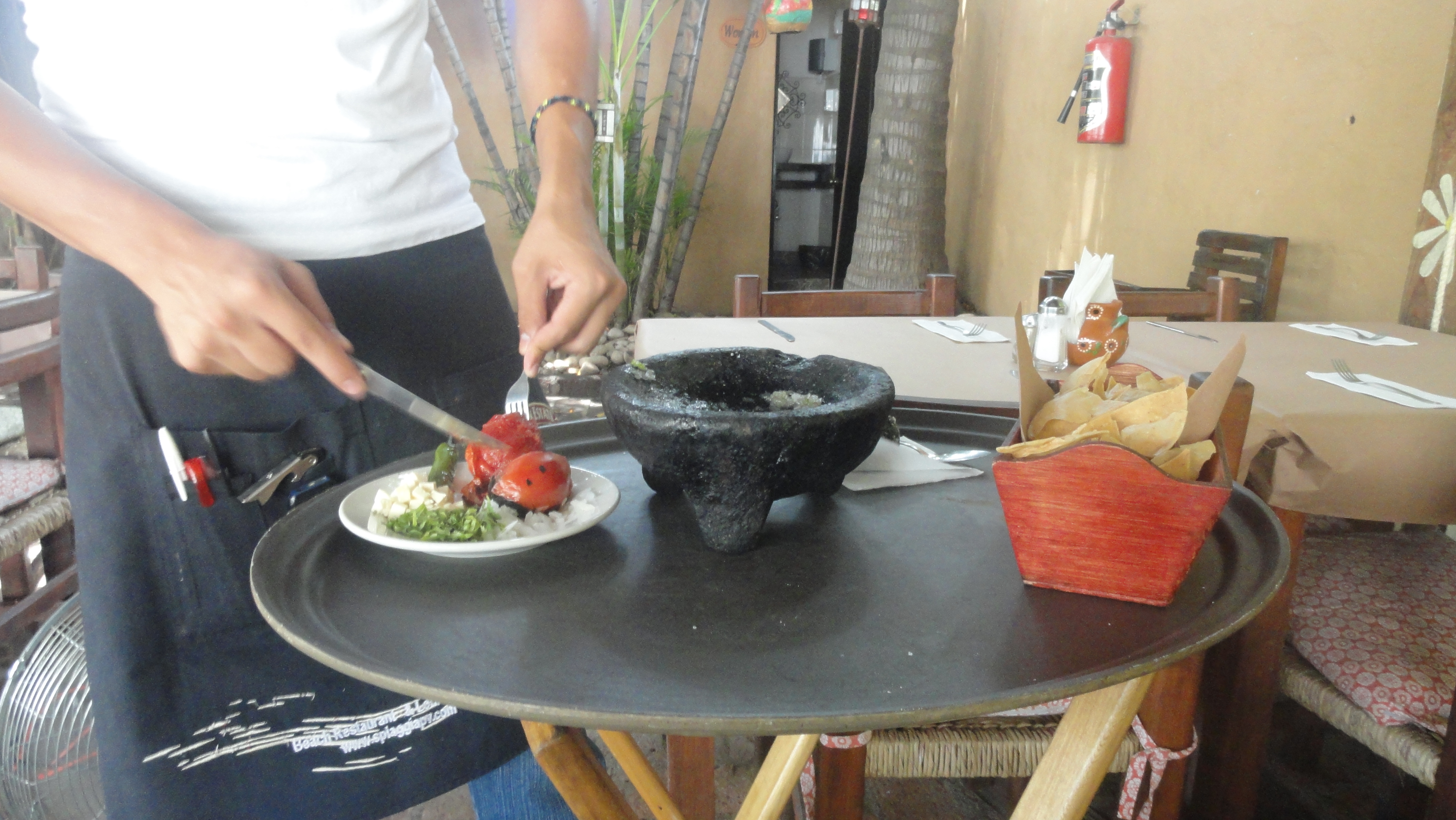
Salsa is not just for dipping chips. We had some incredible local breakfast foods all served with salsa.
-
Jaliscienes value their salsa variety. Even at the tiniest taco shop, three types of salsa were served.
-
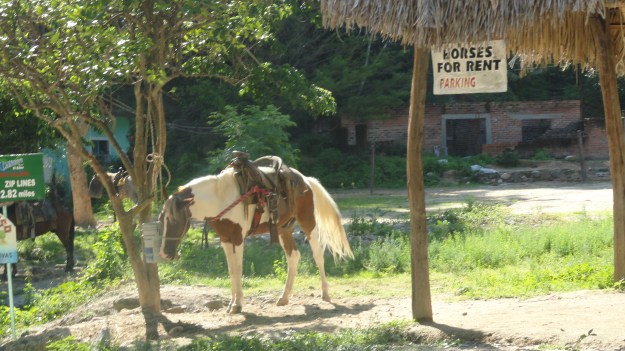
Horses are still a common mode of transportation in the country.
-
They people of PV have so much more patience than the average American. They patiently wait until the customer is done to bring them their bill. They patiently assist foreigners as they linguistically stumble with their 8th grade Spanish. And when it comes to the arts, their patience is absolutely astounding.
Tag Archives: Travel
How to be Global from Home
With my 75th post yesterday, I went back and read through my blog. As I did, some things stuck out. I recognized some patterns and themes in how I’ve been global from home. These certainly aren’t all the ways to bring your experiences from abroad back with you, but for me, these have been a good way to start.
1. Reflect on my abroad experiences
When I started this blog, I realized that there were lots of experiences from abroad that I had not really thought about again. Through postcards to Grandma, reminiscing with friends, and drawing comparisons with my every day life, my reflections from my abroad experiences has been one of the best ways I’ve been global from home.
2. Interact with people who love culture/travel as much as I do
Since I can’t live abroad right now, I like to live vicariously through others. The Abroad Blog of the Week has been my best way of interacting with others who are abroad living out what I can only imagine right now.
3. Help others experience culture or adjust to mine
For me, this mostly plays out by being a study abroad advisor. I love helping others explore where they want to go and really prepare for their time abroad. I’ve also realized that it’s important to help those who are new to my culture. Volunteering with the local refugee community or with organizations like Cup of Local Sugar are a few ways to pay it forward.
4. Eat and cook with culture in mind
My first Friday Lunch was a shameless ploy to get students to come visit me during the summer, but it turned out to be a great way for me to explore foods of other cultures (and try to make them without a kitchen). Hubby and I have also increased our ethnic dining and I promise to cook more internationally once we are settled in OKC.
5. Practice my language skills
My Italian is definitely an area of being global from home that I need to work on, but I have a plan!
6. Global reads and foreign films
With the start of my regional reading list and some great Netflix finds, I feel like I’m learning so much more about countries that I may never have a chance to explore myself.
7. Creatively incorporate travel and culture into my physical surroundings
Whether it be maps, pictures, traditions, or crafts, I’m trying to incorporate visual reminders of the cultures and experiences that I so love.
On May 16th when I posted for the first time, I had an itch I was trying to satisfy. Having not left the country in over 3 years, I felt frustrated that I was not doing something that I really enjoy. This blog has certainly soothed that itch; it has made me intentional about looking at the world 30 miles from my door and seeing all the culture available to me. I’m excited to see where it takes me next.
Abroad Blog of the Week: Partners for Peace
I came upon Partners for Peace about a month ago when I did a tag search for Peace Corps. While I don’t know that the Peace ever fit into my life, I do love reading about others who have delved into the two-year journey. For Mari and Paul of Partners for Peace, this adventure has taken this married couple from NYC to Palmar, Ecuador. Despite connectivity issues, M&P post regularly and give a ton of detail about being a Peace Corps Volunteer. I first started reading their blog when they were opening a pizza parlor in Palmar (great posts), but since have gone back and read their engagement story and process of applying for and getting placed with the Peace Corps. If you are even contemplating the Peace Corps, Mari and Paul’s blog is definitely one to read.
I caught up with Mari and Paul this week via email to ask them a few questions about their lives in Ecuador with the Peace Corps. See what they had to say!
What are the best/most challenging aspects of your Peace Corps assignments?
MARI: One of the best aspects of my Peace Corps assignment is that I am able to combine several of my skills and passions into individual projects. For example, I am working with a women’s artisan cooperative called Mujeres Cambia (http://mujerescambia.com). Members of the group make incredible hand-made jewelry out of recycled paper. You can’t tell by looking at it that it is made from paper. Most people think the beads are made of glass, ceramic, or wood but they really are made of paper! I am able to share my love for making things with my hands (I used to be the executive director of an arts nonprofit in Brooklyn, New York) at the same time I am able to design promotional materials and a marketing strategy for the group. Further, I am constantly motivated as the women learn new business skills like branding, accounting, promotions, and inventory.
One of the more challenging aspects of service is that while we act as catalysts for change we are also forced to change a lot in our current context, too. For instance, I was used to being a very independent woman in New York City – walking around alone, sharing household chores with my husband, traveling wherever and whenever I wanted, working outside of the home – and many of these activities are less common for women in my particular town. I am in the privileged position of being from somewhere else so I am given a pass on most of these things but I am often the exception acting in this way.
PAUL: The reason I joined the Peace Corps is that I wanted to do something different with my life. Mari and I were happy in NYC but we were restless and looking for adventure. We wanted to live abroad, learn a language and at the same time do some good. We find ourselves 2 years later in paradise. We are on the beach, working with an incredible team and couldn’t be happier. I agree that our most rewarding project is with the women’s group, Mujeres Cambia. Everyone who sees their pieces does a double-take. It is an
incredible gift to be working with such talented women.
Who has helped you adjust to your life in Ecuador?
PAUL: What Mari says is true. While many of our peers are here alone I am here with my best friend. Together we are learning about the culture of Ecuador as well what it means to be a Peace Corps Volunteer. In reality, it is also challenging because Marisa is a superstar so it’s sometimes hard to keep up. I strive to keep up with this powerhouse motivator, facilitator and designer but enjoy having a role model by my side.
You recently helped open a pizza parlor in Palmar. What are your favorite pizza combinations?
PAUL: Helping start a pizza restaurant was a rewarding project where we designed and built out the space and of course perfected a recipe. In Palmar, because most people have never had pizza before we wanted to stick to the basics at least at first. In 2013 look out for shrimp pizza at a Palmar Pizza near you!
If received a care package from home, what would you want in it?
PAUL: My parents have been sending incredible care packages these past couple of months. We usually look forward to simple things like suncreen, cookies, or towels and always look forward to any hand written notes. I am also always excited about things that support our projects. Now I am trying to solicit old smart phones from friends that we could use for our business projects where we do accounting and inventory by hand.
What advice do you have for someone applying for the Peace Corps?
MARI: I would say “Go for it!” It is never too late to apply. We thought that since we hadn’t applied right after college that we had missed the boat but that’s definitely not true. The average age of a Peace Corps Volunteer has increased steadily (I think it’s 28 now) and they are encouraging more married couples as well as retirees to serve.
Also, it’s important to talk to current and returned volunteers. We hosted a potluck at our place for returned volunteers as we were filling out the application. We also spoke with people who had volunteered through other organizations. In the end Peace Corps was the best fit for us and they accepted us so we couldn’t feel luckier.
PAUL: I am on the same page as Marisa, “Go for it!” When we were thinking about Peace Corps we had been out of school for years, had stable jobs and a comfortable life in New York. We were content and happy. Doing something radically different like Peace Corps was risky. It meant not just leaving our jobs but being away from our family and friends. We couldn’t pick where we would live or what we would be doing. There was a chance we may not like our site. There was a feeling that we are giving up a great deal of control over our own lives. But thinking about the past couple of years in New York (which seemed to blur together now) it seemed like having a big change like this would be a way to challenge us. It would be a way to have another type of experience and of course an adventure. Adventure bound, as always.
Thanks so much, Mari and Paul!
Travel Buddy Compatibility
As Hubby and I prepare for our first international trip together, I’ve been contemplating the desirable qualities of a travel buddy. How important is travel companion compatibility? Do you need one to be the leader and the other the follower? One a planner and the other spontaneous? Or do both need to take the same approach for a successful trip?
According to the Myers-Briggs there are 16 personality types that are determined by the following four different preferences.
Favorite world: Do you prefer to focus on the outer world or on your own inner world? This is called Extraversion (E) or Introversion (I).
Information: Do you prefer to focus on the basic information you take in or do you prefer to interpret and add meaning? This is called Sensing (S) or Intuition (N).
Decisions: When making decisions, do you prefer to first look at logic and consistency or first look at the people and special circumstances? This is called Thinking (T) or Feeling (F).
Structure: In dealing with the outside world, do you prefer to get things decided or do you prefer to stay open to new information and options? This is called Judging (J) or Perceiving (P).
Your Personality Type: When you decide on your preference in each category, you have your own personality type, which can be expressed as a code with four letters.
I am an ENFJ – extraversion, intuition, feeling, judging. While Hubby has never taken the MBTI, I’m pretty sure he is an ESTP…almost my exact opposite. You know the saying! In general, I would say this adds spice and depth to our marriage. We each see things from different angles and help each other make the best decision. But other than our honeymoon to Puerto Rico and weekend trips here in the States, we just don’t have much travel experience together.
In all my previous international adventures, I’ve noticed that I tend to pick travel buddies who are like me: organized, planned, and decisive. My friend who I visited in Argentina is a super planner. When I went to Paris with a sorority sister, we had the entire trip mapped out and saw every hot spot in the city in 4 short days. When I traveled with study abroad programs in Japan and Peru, we were extremely planned out. This will be my first time traveling abroad with someone who is not a decisive planner like me.
Fortunately, I’m pretty crazy about Hubby so in the end, just spending time with him will be wonderful. But I’m curious to hear from anyone who has gone overseas with their travel opposite. Please share your tips for a successful vacation!
So I’m pretty excited to say that this time next week, I’ll be global from Puerto Vallarta, Mexico. Hubby and I are taking our first ever trip abroad together to celebrate the end of all his medical training and our move to Oklahoma. To plan for the trip, I asked for some advice from one of my favorite blogs, Travel. Culture. Food. Here are some things we plan to do!
Patted Down for Peanut Butter
I consider myself a seasoned traveler. Between traveling for a living right out of college, living 3,000 miles from family, and doing the regular long weekend out-of-town, Hubby and I fly a good bit; probably about 8 to 10 times a year at this point. In all my travels abroad and Stateside, I’ve never had anything confiscated or been patted down, that is until yesterday.
With our move to Oklahoma next month, we decided to use the holiday (plus a few extra days) to house hunt. So yesterday morning at 6am, we headed to the San Diego airport for our 8:15am flight. I had meticulously packed and tried to prepare for everything. Knowing we were having dinner with a couple tonight, I thought ahead and bought them a gift from San Diego – PB Peanut Butter. Now let me explain, this is not just any peanut butter. This peanut butter is toffee flavored, handmade in Pacific Beach, CA, and costs a whopping $9 for a small jar. It is amazing…and since this couple has three boys, I thought it would be a fun gift rather than a bottle of wine.
Well, TSA did not agree with my gift giving. Me, the well-seasoned traveler, put the peanut butter in my carry-on since I did not even think it would be considered a cream. I mean, it was chunky peanut butter. So first came the baggage check where they ripped the peanut butter from my beautiful wrapping job, rumpled through all my clothes, and let the entire airport see my bras and undies. When I told the TSA agent that he was ruining my packing job, he told me that it didn’t look like I had much of one to begin with. Frustration. Next came the pat downs. Yes, plural. They patted me down twice because the first time I set off the alarm.
Feeling thoroughly groped and $9 of peanut butter lighter, I was able to re-pack my bag and head on to the plane where Hubby accidentally spilt coffee all over us. This goes to say that no matter how seasoned we are, disaster cannot always be avoided in travel. Fortunately the experiences we have when we travel make it worth all the while.

This is what started all the trouble
What travel disasters have you experienced? Make me feel better!
Abroad Blog of the Week: The Parallel Life
I started following The Parallel Life a few weeks ago through a chain of Versatile Blogger posts. They are living one of my secret dreams – a thirty-something couple who quit their jobs, saved their money, and are traveling the world for an indefinite amount of time. There blog shares their adventures and great tips if you want to recreate their journey. I was able to catch up with the bloggers, Ashley and Justin, for a virtual drink in Mumbai. Cheers!
Where are you now and what was your last meal?
We are in Mumbai, India at the moment. Honestly, I have no idea what our last meal was. No, really, I have no idea. We don’t have much experience with Indian food, though we’ve eaten it a number of times back home with friends, we just are never in charge of the ordering so we never remember what the dishes are called. We stopped in a random restaurant for lunch and, not surprisingly, didn’t have a clue what anything on the menu was. We ended up just going roulette style and picked two dishes at random. We know they were vegetarian, rice on the side, one was definitely a curry of some kind, and they were delicious!
What are the best and most challenging aspects of traveling with your spouse?
The best thing is that we get to spend so much time experiencing all these new places together. It’s hard to believe now, but there were weeks when we were living in New York where we were so busy that we barely saw each other except for a few minutes of overlapping schedules either late at night or early in the morning. Now we get to hang out all the time! That’s sort of the most challenging thing also…we have to hang out all the time. We both had a great set of friends back home and we spent lots of time being social, sometimes together but often with our own separate groups of friends. Now, it’s just us. Sure, we meet loads of people along the way in hostels and whatnot (and we’ve met some truly great people that we know we’ll be friends with for years to come), but on a day to day basis it’s only the two of us. We have nowhere to turn on days when we are really grating on each other’s nerves, so that’s taught us a lot about being patient with each other and learning how to avoid big meltdowns.
What tips would you give on saving money for a trip like yours?
For us, the first thing we had to do was get a realistic grasp of what was coming in and out, budget wise, each month. Once we sat down and really looked at our financial situation we were able to get an idea of what we might be able to set aside each month with a few changes to our spending habits. Set a goal for yourself, and really commit to it. I think that’s the hardest part – the commitment. If you want to save big and you don’t make a lot of money, you are going to have to sacrifice some things, but keep in mind that there’s a bigger picture and that small sacrifices add up to huge rewards in the end. We changed little things, like making coffee at home instead of buying it on the way to work, that saved more that you might expect. We also changed some big things, like that I got a second job once night a week, that helped boost our income. I wrote a whole post about this before we left (back when my mom was our only reader) and you can find it here:http://theparallellife.com/2011/09/20/how-we-saved-for-our-rtw-trip-part-i-trimming-the-fat/ It says part 1 because I always meant to write another post on how to actually make a budget in the first place…I should probably get on that!
Of all the places you’ve visited so far, if you could go back to just one spot, where would it be and why?
Gah! This is like the “If you could only eat one food for the rest of your life…” question! There are so many places that we have loved visiting, it’s practically impossible to pick one. At this moment though, I’d pick the southern coast of Turkey. It’s got fantastically beautiful beaches on the Mediterranean, great food, nice people and ancient ruins all over the place. Justin would like to chime in that while he also loved the coast of Turkey, he might pick Buenos Aires, Argentina. He liked the European feel of the city, the nightlife and of course, the steaks.
Thanks for the interview, Ashley and Justin!
Varieties of Goodbye
Yesterday I emailed my students to say goodbye. In two weeks it will be my last day in the Study Abroad Office and then Hubby and I will move from the beautiful coastlines of San Diego to the plains of Oklahoma City for him to start an awesome new job. I am so proud and we’re both excited, but with every move comes the challenges of goodbyes.

To this (courtesy of Brit Gal Photography)
Personally, I have never been all that great at goodbyes. As a child I would cry every time a friend went home after a play date or sleepover. On the day my grandma was supposed to go back to Illinois after visiting us, I would hide her house slippers because I figured she couldn’t leave without them. I just don’t particularly like when people have to leave. And I’m not much better when I’m the one doing the leaving either.
For those of us who have traveled, I’m sure we have all faced challenging goodbyes. I am most familiar with the travels that last a semester to a year where we have to say goodbye to family, friends, colleagues, Sundays school classes, book clubs, running groups, etc. They can be emotional goodbyes because often they are a lifetime of relationships, but usually you know that you’ll be back which provides a great deal of comfort.
When we leave our host country to go back home, the goodbyes are often different. We have to say farewell to host families, tour guides, bus drivers, professors, roommates, classmates, and travel-mates. Though we may have only known these individuals for a few months, the goodbyes are often more difficult. So much has been shared. So much has been experienced. And usually we can only leave with the hope that someday we will have enough time, money, and vacation days to come back.
For me right now, I would say this particular goodbye feels somewhere in the middle. We have only lived in San Diego for a year but in that short time, I have made fast friends and gotten very attached to my students. However, the experiences have not been as intense as they were when I studied abroad. There was never any rush to see and do everything here in San Diego, because it wasn’t always known that we were going to leave so quickly. And though this isn’t home, as I begin to say my goodbyes, it feels more like a “see you later” rather than “I hope someday our paths will cross again.” At least I hope that truly is the case.
There are so many types of goodbyes. The quick farewell to colleagues as you run off to your evening gym class. Kissing your husband goodbye as you drop him off at the airport for a conference. Saying goodbye to a friend as she heads off for a job in Amsterdam. The permanent farewell of a loved one after she takes her last breath. While each goodbye may seem to vary in distance and finality, each is important. I think the act of saying goodbye, while it may be difficult, shows that they matter to me. So though it is one of my least favorite activities and I’m not very good at it, I have to say goodbye.
To Ali, Andra, Karen, and Rose, I cannot express enough gratitude for how you have each embraced and accepted me. There is a bed for you in Oklahoma if you ever want escape from paradise for a while. I will really miss you but will see you later.
As for you, my dear readers, I’m not going anywhere. My 30 mile radius is just moving about 1353 miles east.
Abroad Blog of the Week: The Cantaloupe Tales
When I came upon The Cantaloupe Tales a few weeks ago, I was reading through study abroad posts on WordPress. It’s my favorite tag as I do love me a good ole study abroad blog – one that has pictures of the Eiffel Tour or the experience of a student eating her first Italian gelato. But what I enjoy the most is when I find ones that are unique, filled with character, and so funny that I almost wet my pants. Well, Cantaloupe Tales is one of those blogs. The blogger, Katie, is witty. She can tell a great story and has made me laugh to the point that Hubby has come in our office to see what is going on. If you’re having a bad day, read this post from Katie. I promise you’ll be tearing up from laughter by the end. Katie’s humor doesn’t end there. I have had the wonderful privilege of emailing with her and she answered a few questions about her blog and experience in Morocco. I hope you will enjoy her writing as much as I do.
Katie from the Cantaloupe Tales
Why did you name your blog The Cantaloupe Tales?
You know, I don’t really have a good reason, except that it was the first thing that popped into my head when I sat down to create it in January. Maybe I got confused between which snack I wanted to eat and what I wanted to name this new blog; I do that sort of thing when I’m hungry. It also sort of sounds like the Canterbury Tales, which makes me sound educated and clever. The first post is called “A Melancholy Tale,” (get it?) and it’s a very short, very dumb story full of puns about two star-crossed lovers who also happen to be melons. The last line is: “‘I love my melon lover,’ sobbed the melon, “but now we cantaloupe!” I know, I know. I can’t believe I have readers either.
What surprised you most about Morocco?
Healthcare. Is. So. Cheap. (For US-ians, anyway). When I came down with intestinal parasites (avoid those), I dragged myself out of bed to a private practice Moroccan doctor, who made us wait forever but only cost 200 dirhams (approximately exactly $22.7110). Then I went to the pharmacy and got my meds. Long story short, you just walk in and tell them what’s wrong with you. For Moroccans, I know that this isn’t exactly chump change, but as someone whose paycheck (when employed) comes in dollars, it was a bit of a relief. Also: don’t eat unwashed salads. Parasites suck (ugh, literally. Ugh, get me off the Internet).
Also, when inside a Moroccan family’s house, everyone wears their pajamas all the time. One gets dressed to go out. Brilliant! It was fantastic. Bring your jammies.
Did you pick up any local habits/customs while living abroad?
I read this question to my mother, who laughingly replied, “Well, look at what you’re wearing!” She was right: I’m wearing a Moroccan gandora, which is a traditional garment that my host family gave me the day before I left Morocco. I also wear harem pants now. Other than my increasingly dubious wardrobe, though, it’s hard to say: when living in Morocco, I picked up plenty. I ate with my hands, mastered the squat toilet and bucket operation, and grew accustomed to haggling in the souk. Lots of small things come to mind, tiny and huge lifestyle changes that add up to making a new home as the months pass.
What have I brought back to the U.S., of all these customs and habits? I’m still not sure. People use forks and toilet paper, and it’d be crazy to try to haggle at Target. I like to think I’ve brought back something, though. A puffy Hello Kitty bathrobe? That little purple rug? I’ll let you know when I figure it out.
From your experience, was it harder to go to Morocco or to come back home?
BOTH. I know that’s sort of a weenie answer, but let me explain. I struggled with adjusting to Morocco: I missed my friends, culture shock, the works. Yet adjust I did, and as my airplane departed Casablanca, the last thing I wanted to do was completely change my way of life—again. I love Morocco and its rich culture, history, politics, and mostly, its people. Slipping into all of my old U.S. habits was easier than forming new Morocco habits had been, but once home, I realized that nobody (except for a select few) knew or really cared about Morocco. That’s been weird.
So both were challenging in different ways. No matter which way the cookie crumbles, though, you’ll forget where your comfort zone was and replace it with some good, wholesome awkwardness. I’d do it all again, and not change a thing. Well, except for waiting so long to see a doctor about those parasites. Seriously.
What three pieces of advice would you give someone who was planning to live/study in Morocco?
1. Travel as much as you can, Morocco has pretty great public transit. Go to Chefchaouen and Asilah! Climb Mount Toubkal! Run around on beaches! Play soccer with Moroccan kids!
2. Don’t be too paranoid about people ripping you off in the souk. Get some ballpark prices from Moroccans for certain items, and haggle away! Don’t be shy! But honestly, you’ll end up paying a bit more for some things because you’re foreign anyway. When it’s a difference of 10 dirhams, what’s one more dollar to you? You’re boosting their economy. Smile. Make friends with the shopkeepers. Have a ball.
3. Learn Darija and talk to people. All the time. Never stop talking to people! Ladies, just ignore the catcallers, but talk to people! That’s the point, right? Crossing cultural and linguistic boundaries. Seriously, learn Darija. It’s fun. Chat ‘em up! Good luck! Have fun!
4. I know you said three, but I just thought of an important one. Bring hand sanitizer. There’s never soap, and when you’re using a bucket and water, you’ll want to wash your hands thoroughly. Oh, yeah, and eat lots of couscous. Go to a wedding. Beware of leben. Okay, I’m done. Thanks for reading!
Thanks for the interview, Katie!
Pecorino Moment
Do you ever have those moments that catapult you back to into your memories from abroad? I had one of those last night – what I would call a “pecorino moment”.
Hubby and I went for some great Italian in La Jolla at a little place called Barbella. It was a lovely restaurant with an open covered porch and all kind of character. The menu was small but looked scrumptious. Trying to implement portion controll, we shared the cheese plate, a bibb salad, and fettuccine alla bolognese. When the cheese plate arrived, I was immediately thrilled to find one of my favorite combinations: pecorino e miele (sheep’s cheese and honey). As soon as the sweet and salty concoction touched my tongue, memories of a meal in Montalcino sprung to my mind as if I was reliving it again from 9 years ago.
In general, I would say I am not a lover of food. I more eat to live, than live to eat. I could eat a turkey sandwich for every lunch for the rest of my life and be fine. But there are a few meals that I have partaken in during my 30 years that are truly memorable (for good or bad):
Age 7: My Aunt Ethel made cabbage rolls and my mother told me I had to try them. I told her that green was not my color.
Age 15: I went to the homecoming dance with a group of people and at dinner all the girls ordered salad. Trying to not be the odd duck who really wanted steak, I had my first salad ever and discovered that maybe green was my color – at least if it had enough bleu cheese dressing on it.
Age: 18: I was in South Africa volunteering at local high schools and staying at a Christian camp that provided three meals a day. We were told we had to eat everything so as not to offend. This included the neon pink hot dogs; I’m still not sure what they were made of.
Age 20: Sitting in a tiny restaurant in Montalcino, Italy, I had the very best meal of my life consisting of risotto di Brunello di Montalcino (risotto made with red wine) and pecorino e miele.
Age 27: Dining with a group of students in Cusco, Peru, they decided to order cuy (guinea pig) for the table. I just couldn’t get myself to try it…with teeth and all staring at me, I contemplated becoming a vegetarian.

I just couldn’t do it.