Abroad Blog of the Week: Milk and Whisky

Since I’m American, I always think of an abroad blog being outside of the U.S. But if your Cambodian, Argentinean, or French, the U.S. is definitely a foreign country. So when I found Andy’s blog, Milk and Whisky, I thought it would be a great abroad blog of the week. Andy is a British college student who is studying at Ball State University in Indiana for the next year and pointing out the cultural differences along the way. He’s funny and opinionated and he has made me learn new things about my own culture.  I was able to catch up with Andy to ask him about his experiences so far in the middle of America.

How did you decide to study abroad at Ball State?

It’s not a terribly exciting story. Our university offered a study abroad program. I thought it might be fun. I’d always been kind of interested in going to America. A side effect of too many Hollywood movies. That and I knew I wouldn’t have the patience to study anywhere where English wasn’t a first language. I put down three colleges that did my course and I happened to get Ball State.

Did you watch the presidential debate last week? What did you think?

I watched long enough to get a feel of what was going on. I get tired of political debates because you simply don’t know who’s telling the truth. There’s no way of quickly checking whether what’s being said is actually correct. On a purely charismatic level, I thought Romney was better whereas Obama appeared hesitant.

What have been the most surprising differences between home and Indiana?

It’s not really the major differences that get you but the accumulation of small differences. That being said, the two most noticeable differences were in assessment and night life. When it comes to night life, Ball State has made me so glad to be British. I miss our students union and university bars.

The college does organise events but with a few exceptions, they’re pretty poor. I feel sorry for the RAs because I know how badly they want people to go but at the same time I’m rarely interested in what they have planned. If you want to have any fun around here you’ve got to go off campus and find a good house party.

I knew I was going to have frequent assessments before I came but I wasn’t aware of how difficult it would be to adapt to it. It’s good that it forces you to consistently study and you get a deeper knowledge of your subject as a result but at the same time I think the workload for some of my classes is unreasonable.

Will you give football another chance?

Maybe. Probably not college football, I don’t really enjoy standing on crowded bleachers for hours pretending to care about something I barely understand. I did watch an NFL game recently which wasn’t too bad. There was a lot of commercial breaks though. Like every fifteen minutes. It got a bit tiresome.

What do you love/hate about being a Brit in the U.S.?

The best thing about being here is the people I’ve met. I’ve made some great friends. Our university offers a friendship family program and their hospitality has been mind-blowing  Going sightseeing in New York. Taco Bell. Corn dogs. The library computers here have two monitors. Ask me when I’m back in England and I’m sure I’ll have a list that would run for pages, haha.

A few things have bothered me, mainly to do with the lifestyle shift. The night life I’ve already mentioned. Meal plans are a nuisance. It’s only real purpose is to restrict what, where and when you eat. I’m not at school any more. I can buy and cook my own food.

I’m also not a fan of room-sharing. I don’t have any problems with my roommate but I like having my own room. Room sharing doesn’t really serve any purpose (except for being a good excuse to squeeze more students into dorms) and it’s just an unnecessary nuisance.

What advice would you give to another student planning to study abroad in the U.S.?

Meet Americans, straight away and as soon as possible. They’ll know where to go, what to do. If you’re only hanging around with people from your home country, you’re wasting an opportunity.

Remember you’re not there for very long. Here’s one of your few chances to try things with no long-term implications. Make of that what you will.

Here’s Andy with two of his fellow study-abroaders from England tailgating before the football game. He’s in the middle holding the squirrel, his university’s mascot.

Czech This Out

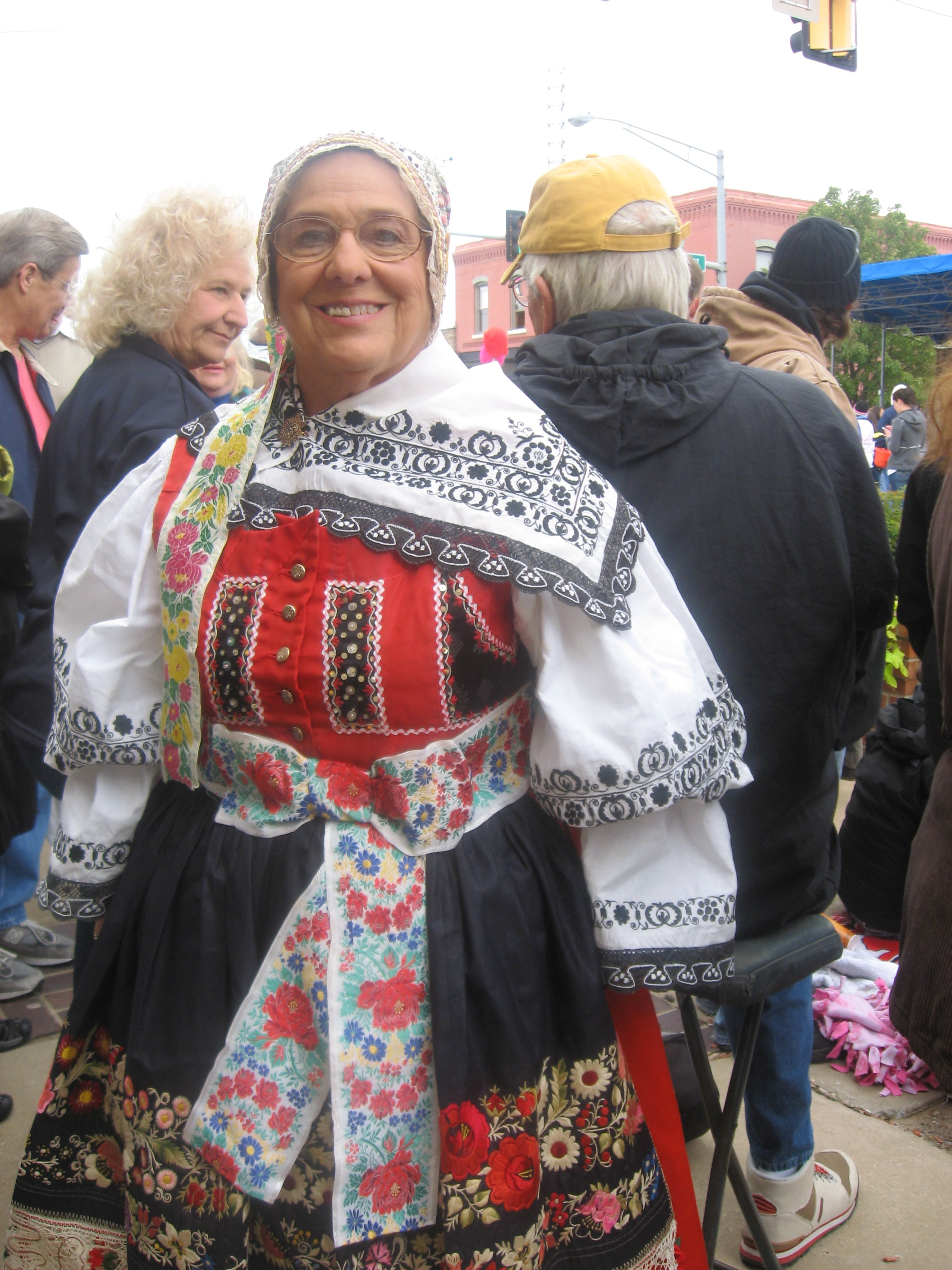
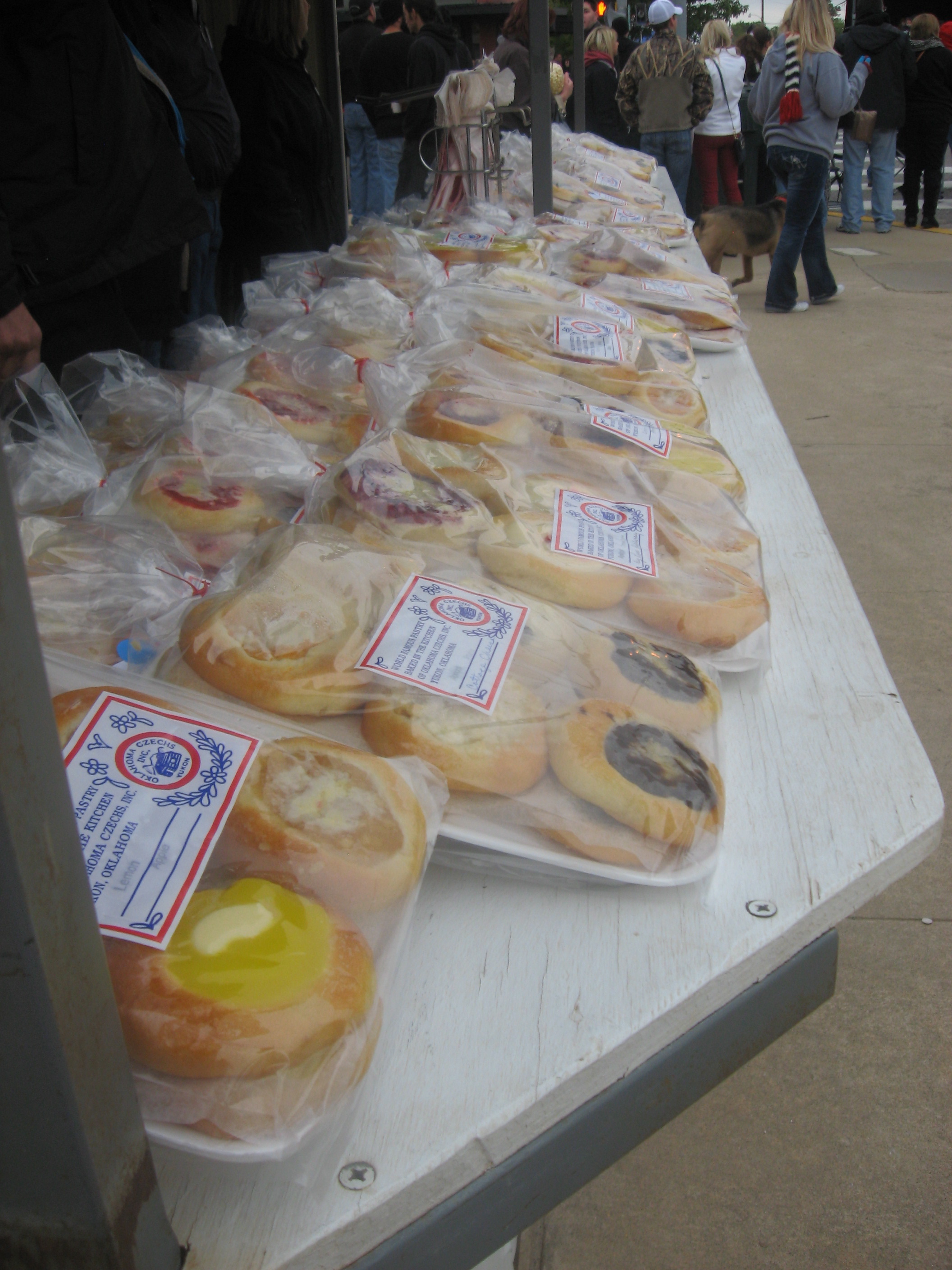
It was only 45 degrees outside but thousands of people still lined Main Street to watch the Czech Day Parade come through downtown Yukon, Oklahoma. To celebrate the immigrants from Czechoslovakia that settled in Yukon in the early 1900s, the town puts on quite the party each year. The two day festival blended traditional Czech culture with its Oklahoma setting.

Traditional dances were matched with the local high school cheerleaders.

The klobasy were sold as the cowboys rode on by.

The Czech ribbons and crafts could be found right across from the painted bull’s skulls.

But most of all, Czech and Oklahoma pride were blended into a great celebration for this little town.

The Language of the World

The sheep had taught him something even more important: that there was a language in the world that everyone understood, a language the boy had used throughout the time he was trying to improve things at the shop. It was the language of enthusiasm, of things accomplished with love and purpose, and as part of a search for something believed in and desired.

~ The Alchemist by Paulo Coelho

Sitting at the top of the slide, his five-year old body was slumped and his face was marked with a scowl that was almost impenetrable. I called his name several times but he didn’t budge. I asked what was wrong, but there was no answer. He pulled his knees up to support his chin, which supported his protruding, pouting lower lip.

Finally, not knowing if he understood my words, I substituted them with funny faces. It is my honest belief that almost any child can be redirected if I try hard enough. I did moose ears, the pucker-faced fish, but it was the blown-up monkey cheeks that did him in. His lower lip slightly retreated and he lifted his flip-flopped foot up to show me a small scrape on his ankle.

“Ouch,” I said. “Let me blow your boo boo a kiss.” I put my hand to my mouth and made a kissing noise as I pulled it away. He then followed suit and kissed his hand and put it on his ankle. Miraculously healed, he came down the slide and raced me to the merry-go-round, laughing as he ran. In that moment, I understood Paulo Coelho’s idea of the language of the world. This little boy from Malaysia could not understand my words, but in the end he understood my message.

The Kettle Question

I’m a coffee addict. I get up every morning, turn on the coffee pot, and sip my two cups. My mother, on the other hand, is a tea junky. If I ever want to show her I care about her, I could just go make her a cup of tea and she would be thrilled. She taught me how to make tea at a young age. Get out a cup. Drop in the tea bag and fill with water. Microwave for 90 seconds.

I think I may have just heard gasps from across the pond.

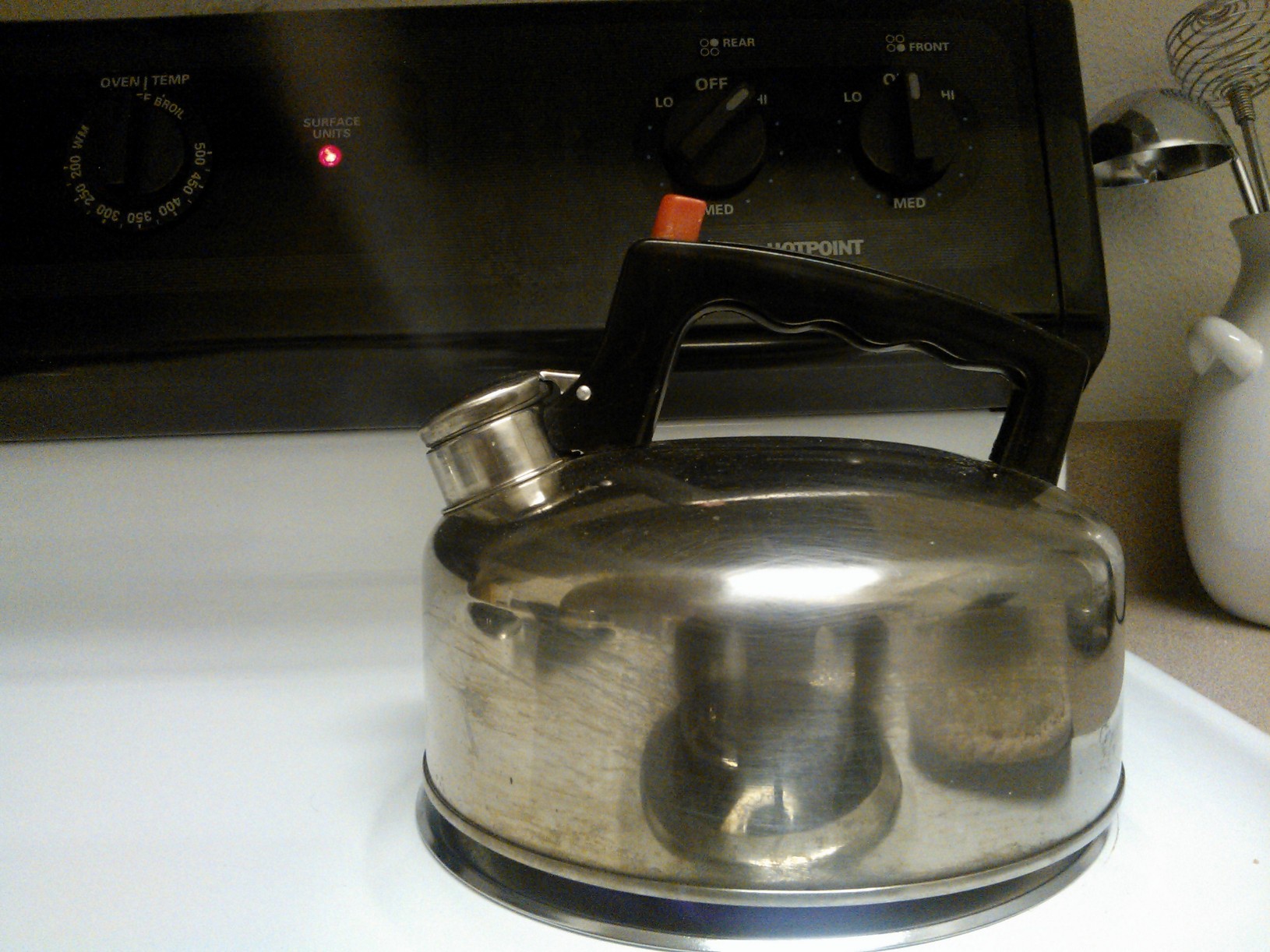
I remember reading a post from one of my students last year who was studying in the U.K. She had put her tea cup in the microwave and all of her British roommates looked at her like she had a second head. They could not believe she was not using a kettle. On the other side, Andy from Milk and Whisky faced a dilemma when he first arrived in the U.S. and discovered Walmart does not sell electric kettles.

The more I think about it, the more I realize that the choice between using the microwave or the kettle is a reflection of our cultures. As Americans, using a microwave is an indication of our values of ingenuity and efficiency. While for the Brits, the kettle is a symbol of quality and tradition. I’m sure both sides would argue which way is better, but in the end, I think I each society will choose the way that reflects what is important to them.

For me, who is attempting to be global from home, I’ve decided to start using the kettle. I tried it for the first time about a week ago and was so excited to hear it whistle when it was ready. Although it took a while longer, I have to say it was a delicious cup of tea.

What do you use? Microwave or kettle?

Abroad Blog of the Week: Turkish Musings

I started following Hayley from Turkish Musings almost four months ago when she was just in the process of preparing for her semester in Ankara. As a study abroad advisor, I can say from experience that Hayley put a lot more time into preparing than most. She debated whether she would wear a headscarf, started learning Turkish on her own, and even got a pen pal. Hayley is now in her fourth week in Ankara and though she’s had her ups and downs, her research and preparation have definitely paid off. Her posts are now filled with her stories in which Hayley has a way of making you feel like you’re traveling with her. For the next four months, she has officially given up Lake Michigan and figure skating (she’s an official for USFS) for the Mediterranean and exploring the history and culture of Turkey. I was able to catch up with Hayley this week to learn more about Turkish Musings and her first few weeks in Ankara.

Your very first post was actually not written by you. How did Turkish Musings get started?

Oh, I forgot about that one! Yes, my friend started my blog for me and she wrote the first post as a type of “friendship love letter.” I keep it because it reminds me of the primary audience I write this blog for: my friends and family back home. After I found out that I was accepted to study abroad at Middle East Technical University, I told everyone that I was going to create a blog to keep in touch with them. But for me, the study abroad process started several months before I arrived in Ankara; I began researching about Turkish and Muslim history and culture and bounced my thoughts, ideas, fears, and goals off my friends. They suggested that I start a blog as soon as possible to share my ideas but I was wary because, really, who wants to read a study abroad blog when the person isn’t even abroad yet? Finally Elizabeth, who I think was sick of my silly excuses, started Turkish Musings and wrote the first post. It jump-started by blogging; I edited some drafts I had been working on, posted a couple posts, received positive feedback from friends and strangers….and here I am right now!

 Now that you’ve been in Turkey for a few weeks, what have you found the most surprising?

This is going to sound silly, but everyone back home told me to look out for Turkish boys because they love blonde girls. But actually, no guy seems to be interested in me–which is awesome because it was never my goal to “find love” or anything like that while I’m here. From what I’ve observed, 1) Most of the people on campus are already in a relationship, and Turkish men are loyal to their women; and 2) If a Turkish guy is looking for a foreign girl, he is first-and-foremost looking for a Russian or Ukrainian. Don’t know why, but that’s what I’ve noticed so far here. I would say guys seem more interested in me in the more touristy parts of Turkey (such as Alanya), but at least I’m safe in the capital!

A second surprising thing is that despite being in a Muslim country, I have yet to see anyone pray during the day. I have noticed several mosques in the city and I hear the call to prayer on campus (in fact the sundown one is going on as I type this), but Turkey is truly secular in that the work day continues and you can’t deter from it!

 At this point, how would you spend a free day in Ankara?

First-and-foremost I would visit a mosque because I have yet to get to one. The largest mosque in Ankara is the Kocatepe Mosque and I’ve heard that it’s worth seeing. I would grab some lunch at a little restaurant (none in particular, there are so many and they’re all good!) and accompany the food with çay (Turkish tea). From there I would go to the Museum of Anatolian Civilizations for a few hours–by myself–and take my time going through the exhibits. Even though I went there with the orientation group, we only had 45 minutes and that is not near enough time for a place like that! Shopping would be next; I’d probably start to buy little gifts as Christmas presents for my friends back home (because it’s never too early to shop for Christmas). Finally, I would venture to Kızılay, Ankara’s downtown, with friends and finish off the evening in a cafe with İskander (a meat, bread, and tomato sauce dish that is to die for), live music, good company, and nargile (Turkish water pipe).  🙂

 How are you feeling being away from ice skating?

Being away from skating is somewhat like a double-edged sword. On the one hand it pains me to be gone from my skating family (i.e., other USFS officials) because they have been a formidable part of my life since I was fourteen. Yet I know that in leaving them, if only for a few months, I will come back with my own travel stories and evolving perspective on life which will make me a better-rounded official of U.S. Figure Skating. And actually, a few of my peers will be on a Mediterranean cruise this fall and will be in Izmir in early November for a day. I’m currently researching the possibility of me meeting them there–hopefully I can make it work!

 What did you do that helped you best prepare for your semester in Ankara?

One of the things I did extensively over the summer was listen to Turkish music and watch Turkish movies. I played music constantly during my commutes in the car–probably much to the chagrin of my friends and family. Basically, I found find several songs and artists that sounded cool, found the lyrics to them (and if possible, the English translation) and listened to them….over and over and over. This helped me learn how to pronounce the letters of the Turkish alphabet, learn the inflections and emphasis of longer words, and it helped familiarize my brain with Turkish in general. Even though I didn’t know the meaning of the words, by the end of the summer I could sing along with many of the songs. And now that I’m attempting to learn Turkish here, I can concentrate more on vocabulary and phrases than on my pronunciation.

Hayley, thanks for the great interview!  

Where Are You From?

In the past, if I heard anyone speak with an accent, I would always wonder where they were from but would never ask. I thought it might be rude or make them feel uncomfortable. Well, I’ve thrown that notion out the window. For someone who is trying to be global from home, that just won’t work. Over the past several weeks, I came in contact with three individuals who were clearly not born in the U.S. based on their accents. Rather than just smiling politely and going my own way, I took the risk of asking where they were from.

The first was a Mexican man who was working at a restaurant here in OKC. I noticed he was a little shy telling me where he was from, but when I immediately responded that I had recently been to Mexico and really enjoyed exploring it, his mood visibly changed. He began to tell me about his hometown, how long he had been in the States, and then asked me my opinion on safety in Mexico. He said he had not visited home in years, but based on the news, he questioned how safe it would be to return to Mexico with his family.

My second experience was with a man who had recently come to the United States from Iraq. He told me about having to leave his wife and baby daughter in Baghdad but has hopes that he will be able to bring them over soon. He told me he wants to get his master’s degree in engineering and how his father went to college in the U.S. at the University of Georgia. We ended up spending several minutes talking about taking the TEFL and the quality of the Georgia football team this year.

The third person I met owns a furniture store in Atlanta and moved to the U.S. from Turkey 18 years ago. But before coming across the pond, she also lived in France and the UK. She talked about having her mother still in Turkey and the challenges of going back home to see her three or four times a year. She told me how she speaks four languages and her brother speaks five. We talked about technology and how something that is suppose to help connect us, often disconnects us from the person sitting beside us.

What I’ve been discovering is that behind the accent there is a story. Leaving your home country and moving is never easy – there are language challenges, family left behind, and new customs to learn. And while I certainly hope that I’m not offending the people I meet, I am so curious to hear about their stories. I am entranced as they tell about what they’ve overcome to be where they are, and I’m eager to hear why they left the familiarity of home to come here. In the end, each time I ask the question “Where are you from?” I believe I am taught something new about the world that I never would have learned if I had to decided to be just be polite and mind my own business.


C is for Columbian Cookies

Well, I had another baking flop today. Not that the cookies I made were bad, but after I made them I realized just how un-authentic they were. I was attempting to make a dark sugar cookie hailing from western Columbia. But I failed to spend the time researching like I should have, and instead just went with the first recipe I found. I should have known better when I saw that recipe was from Pilsbury. (How much more American can you get?) Here is the recipe I used.

After I made them, I started researching. (I know, shame on me.) First I found out that I should not be using dark brown cane sugar but rather panela, a solid sugar cane substance that is then grated into the recipe. Second, the recipe called the cookies “cucas” but according to the Word Reference Forum and Local Spanish, cuca is a dirty word in Columbia. Eek!

It just goes to show that research is important and the internet is not always correct. But regardless, the cookies were pretty good if you’re looking for something a bit different and on the line of a Columbian cookie.

I don’t think the icing is authentic either but I figured I’d add it any way. Who doesn’t like a little extra icing, right?

Cookie, cookie, cookie starts with C.


All Girls are Princesses

Did you ever see the movie the Little Princess? If not, I’ll give you a brief synopsis. The movie centers on an English girl who is being brought up in India when her single father is called to war. He brings her back to the UK and puts her in a boarding school with no expenses spared. But when the British army believes him dead, everything is taken away from the girl and she is forced to become a maid in the school. Despite all that happens, she believes in her dreams and her father’s words that she is princess.

Every Thursday afternoon I’ve been volunteering with Spero Project and helping with the children in our local refugee community. Thursdays seem to be the day where they don’t have much homework so in general, we just play. Yesterday I put out a stack of paper, crayons, tape, and ribbon and just let the kids create what they wanted. There was everything from t-shirts, to paper finger claws, to purses. But what struck me the most were the crowns. With little girls from Malaysia, Turkey, and Myanmar, every single one of them wanted to make a crown to wear. Every one of them wanted to be a princess. As I watched them play, it reminded me of the movie. It doesn’t matter where you come from or what language you speak, all girls are princesses.

Living from a Suitcase

When Hubby and I moved to San Diego last July, we weren’t sure how long we were going to be there. I didn’t have a job and he was completing a one-year fellowship. With so much uncertainty, we put all of our life in a storage unit in Georgia and signed a 13-month lease for a fully furnished apartment. We drove across the country with whatever would fit inside or on top of our car. For the past 15 months we have lived out of 6 suitcases and 12 boxes (most of which are hubby’s medical books). The opportunities for us in San Diego were so great, it was worth putting our lives in a box and living from a suitcase for a while.

Yep, that is all of my life in 10×15 foot box.

As I write this, I think of all the other bloggers who are currently abroad and living from a suitcase. Like Megan from Soulshine Traveler who has jumped around South America, lived in Russia, and explored Europe. Or Ashley and Justin from This Parallel Life who moved from their New York apartment into a storage unit in Denver while they seek adventure traveling the globe for a year. Or my dear friend Mary from Mary in Haifa who has split her furniture between her parents and friends while she takes a year away from her career to complete her Master’s degree in Israel.

For each of these bloggers, they have put away their material possessions to seek something they cannot achieve at home. Whether it is adventure, culture, education, or just a change from the norm, they have prioritized the experience over their belongings. From personal experience, I can honestly say this is not easy to do. But looking back on the last 15 months, I can say it was worth it.